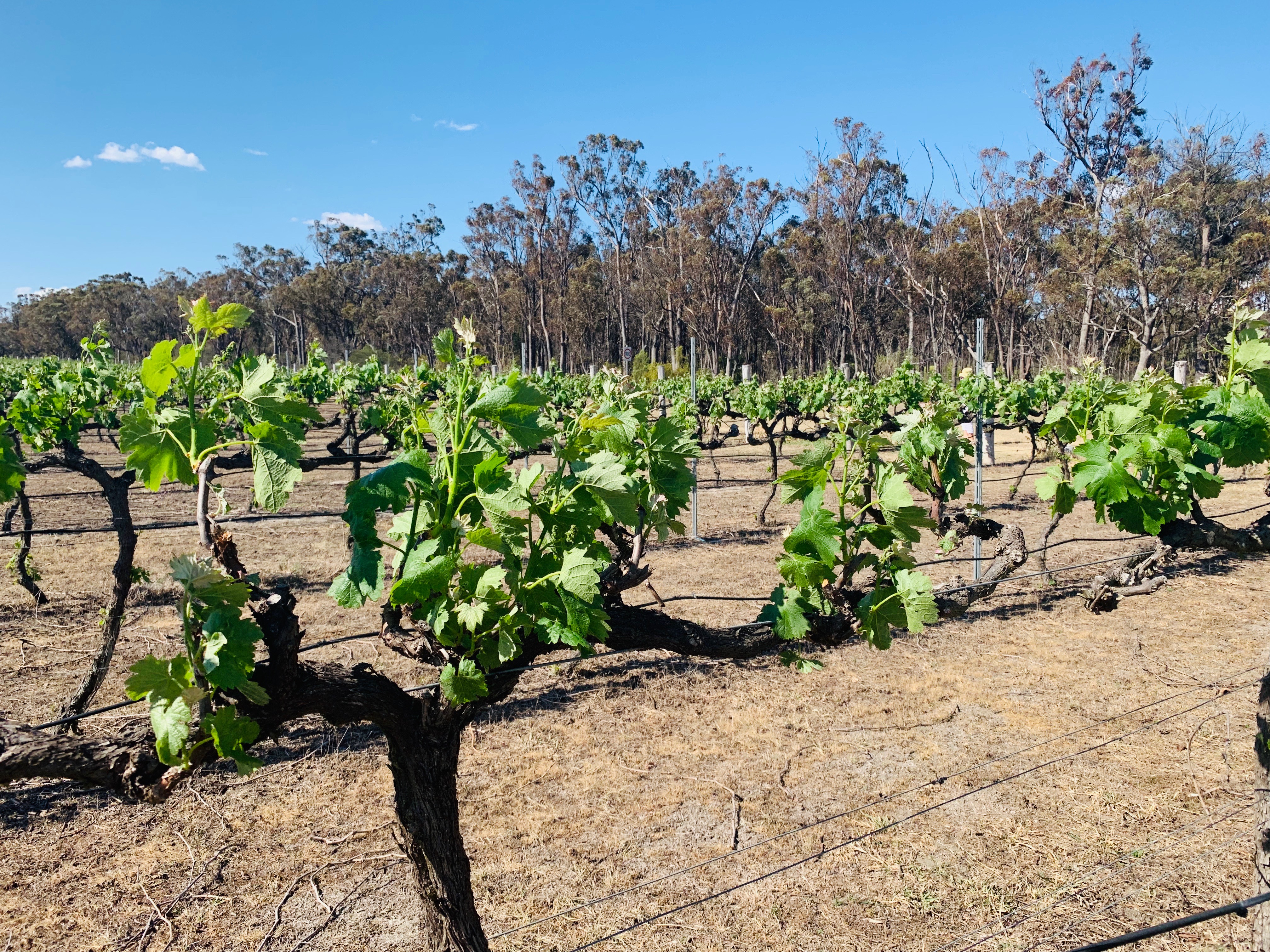
“There’s more wine than water on the Granite Belt right now,” Rob Fenwick, Heritage Estate Wines
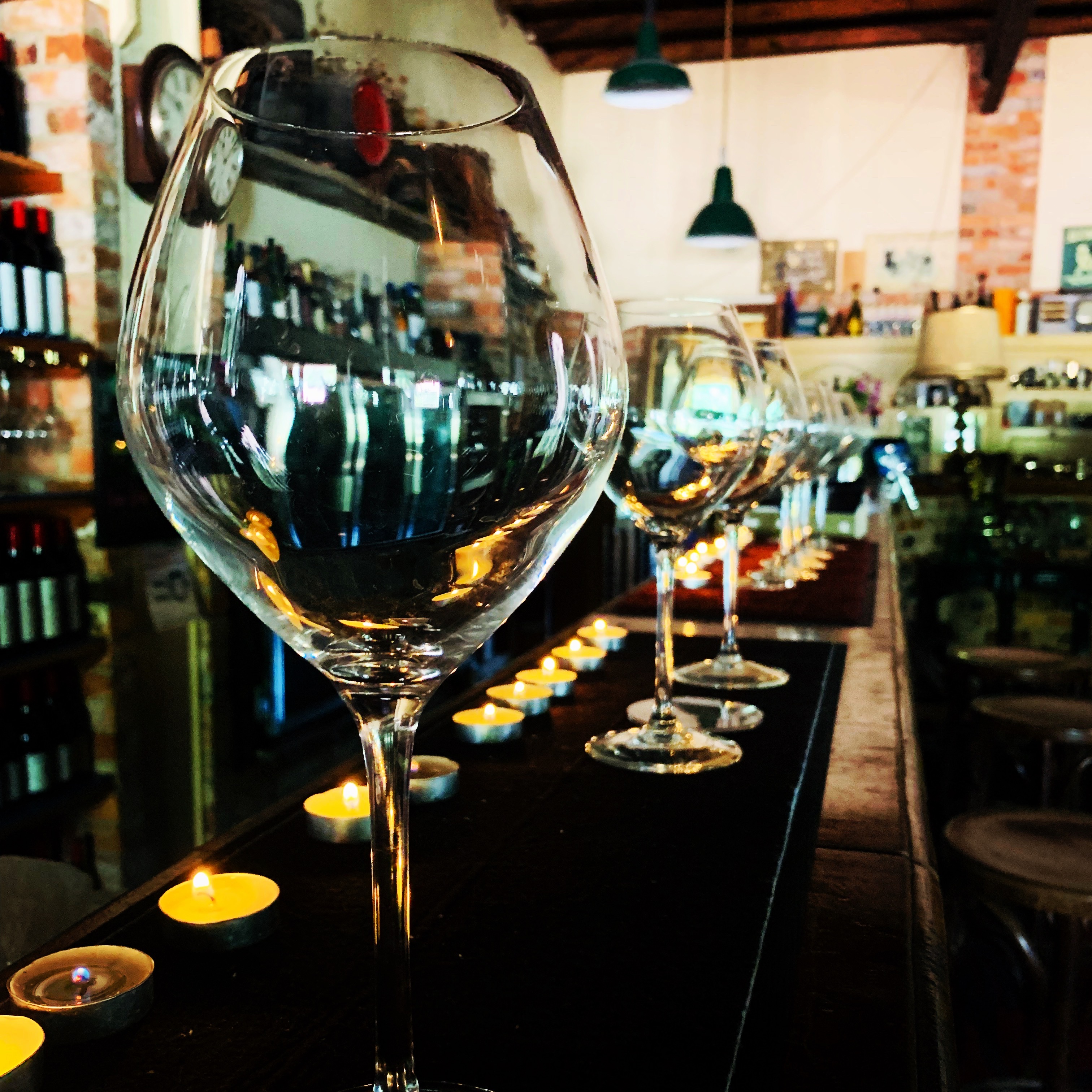
HANDEL’S Water Music is dancing around the room, ducking under a solid steel beam, which was used to build the Sydney Harbour Bridge. It weaves around the ancient timber table at which I am perched, before one final twirl and the German composer’s notes strike my wine glass. I am at Heritage Estate Wines on the Granite Belt, seated around the same solid rosewood and leather table at which the Queensland Government was formed in 1859. But I am not here to participate in a political discussion, rather, I am clutching a French-oaked wild fermented chardonnay, chatting about wine and bushfire and drought. It’s an unprecedented situation: how to turn wine into water. And the irony of those watery, wistful musical notes waltzing around the room are not lost on me.
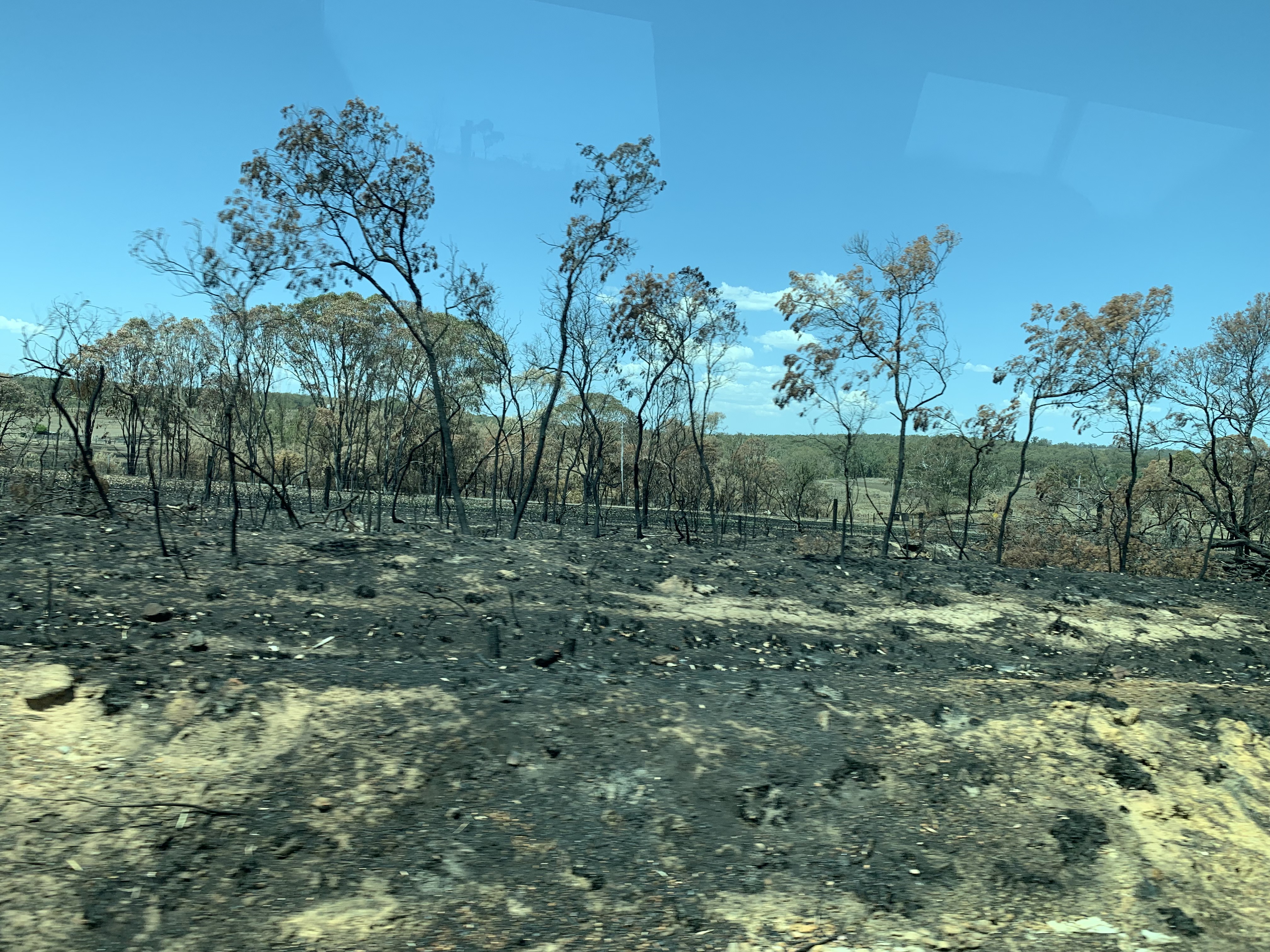
This journey has taken me from Brisbane into Southern Queensland Country, past Aratula before snaking over Cunningham’s Gap, through Warwick and into Stanthorpe. The dams are all but bone dry. The soil is so parched it cackles like a witch underfoot. Recent bushfires have painted patches of country charcoal black. Forget Australian poet Dorothea Mackellar’s sunburnt country, this land is blistering. These ragged, jagged edges are enough to make you weep if you allow it, but save your salty tears. For amid the ashes and the dust which lodges in your throat there is resilience and hope in spades.
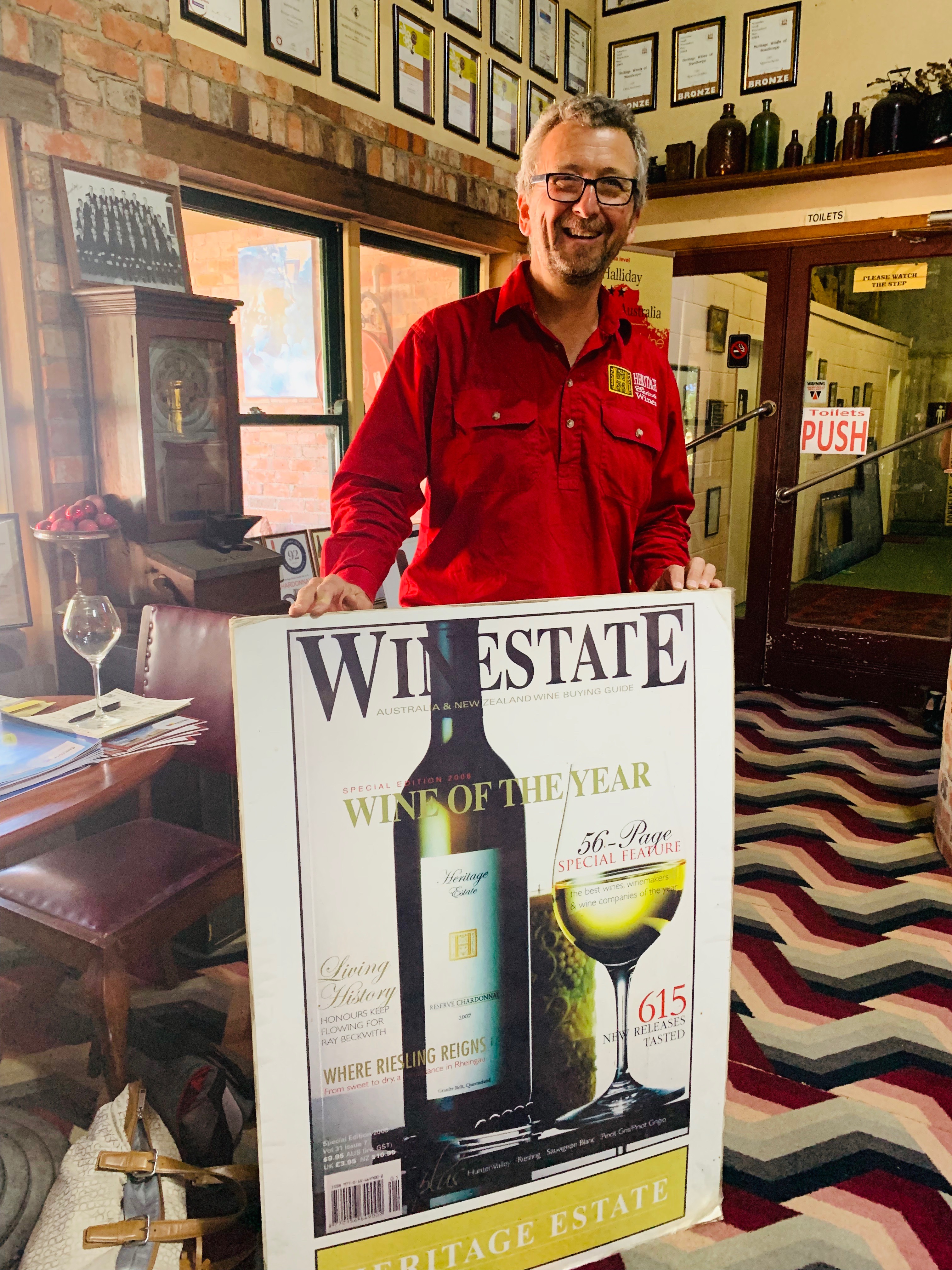
Heritage Estate’s Rob and Therese Fenwick are fighting back in the only way they know how. With wine. The creamy Chardonnay I am drinking, which is about a divisive as climate change itself, won Winestate Magazine Wine of the Year in 2009. I sample my first ever Fiano, made from an ancient Mediterranean variety, and part of the Strangebird wine varieties you’ll find all around the Granite Belt. There’s a buttery Marsanne and a crisp Verdelho on the Strangebird list here too, along with a Tempranillo, Shiraz Viognier, and Shiraz Mourvedre Grenache. While not a Strangebird, I pause to admire the name of the Rabbit Fence Red. Every winery has at least one of these Strangebird or alternative varieties and it’s the secret to this region’s ongoing success.
“People love the experience of small wineries with real owners and people who have skin in the game,” Rob says.
“The 2020 vintage will be small but it should be fabulous. When you’ve had less water on the vine you get a better taste of grape.
“People should come back to the Granite Belt because while we have more wine than water right now, the biggest fear is unemployment.”
I sashay down to Savina Lane Wines, the newest cellar door on the Granite Belt, but with vines that were planted 65 years ago by an Italian family after World War Two. Despite the drought, the first bud bursts are blooming at this winery which is so popular, it only opens to the public for 10 weeks a year. For the rest of the year, wine is sold to an exclusive membership of just 600. The names Fiano, Graciano, Montepulciano, Petit Manseng, Tempranillo and Viognier swirl around my tongue. Brad Hutchings, who owns this winery with his wife Cheryl, indicates towards the 30,000 bottle cellar before saying “The most expensive thing here is the water. It’s a 2018 vintage because that’s the last time it rained.”
But despite the drought, Cheryl is excited about next year’s vintage.
“It should be extraordinary. Because the vines have had a very hard year they’ve struggled and will work much harder to produce moisture and nutrition,” she says.
“The old 65-year-old girls are thriving.”
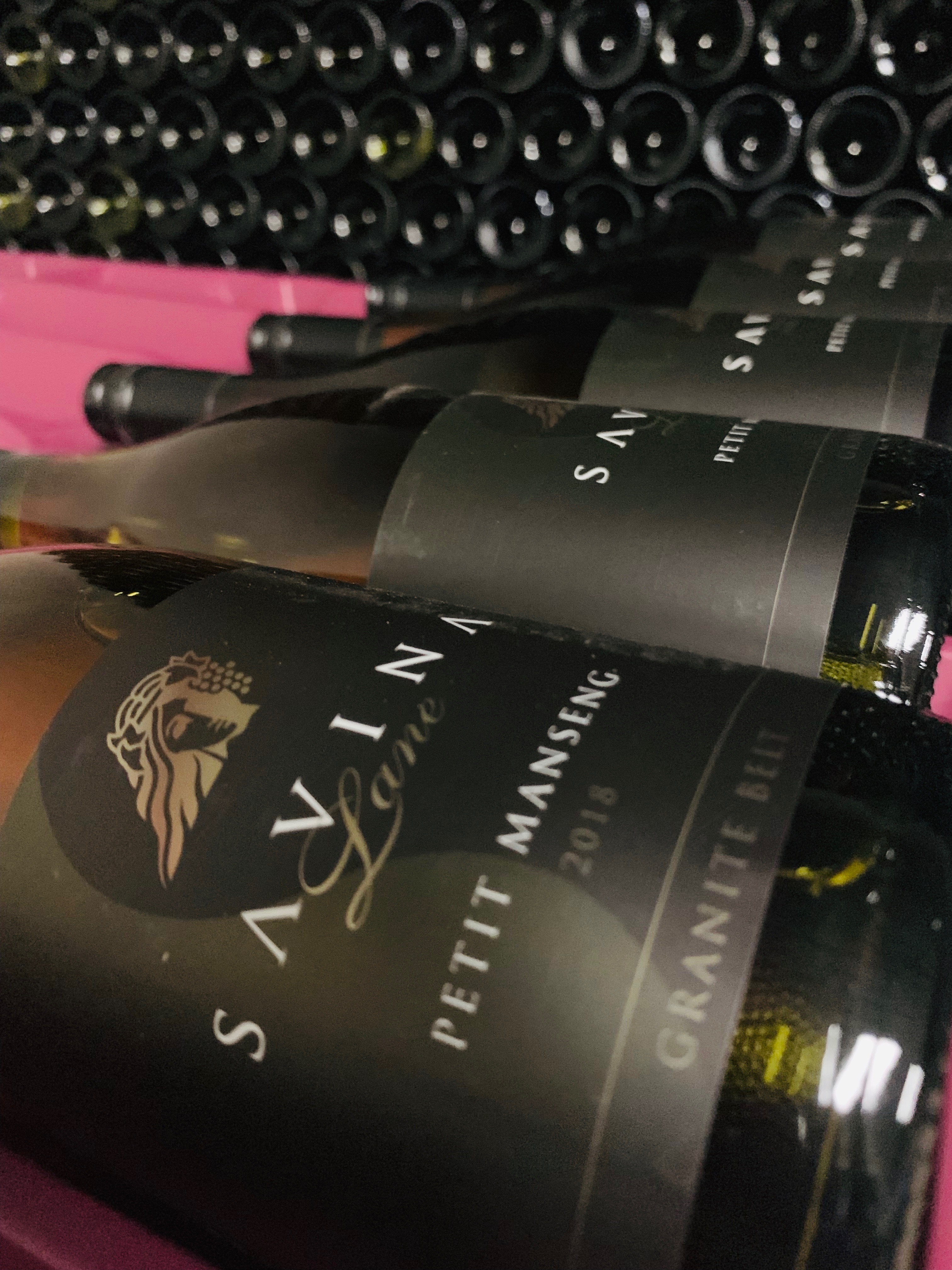
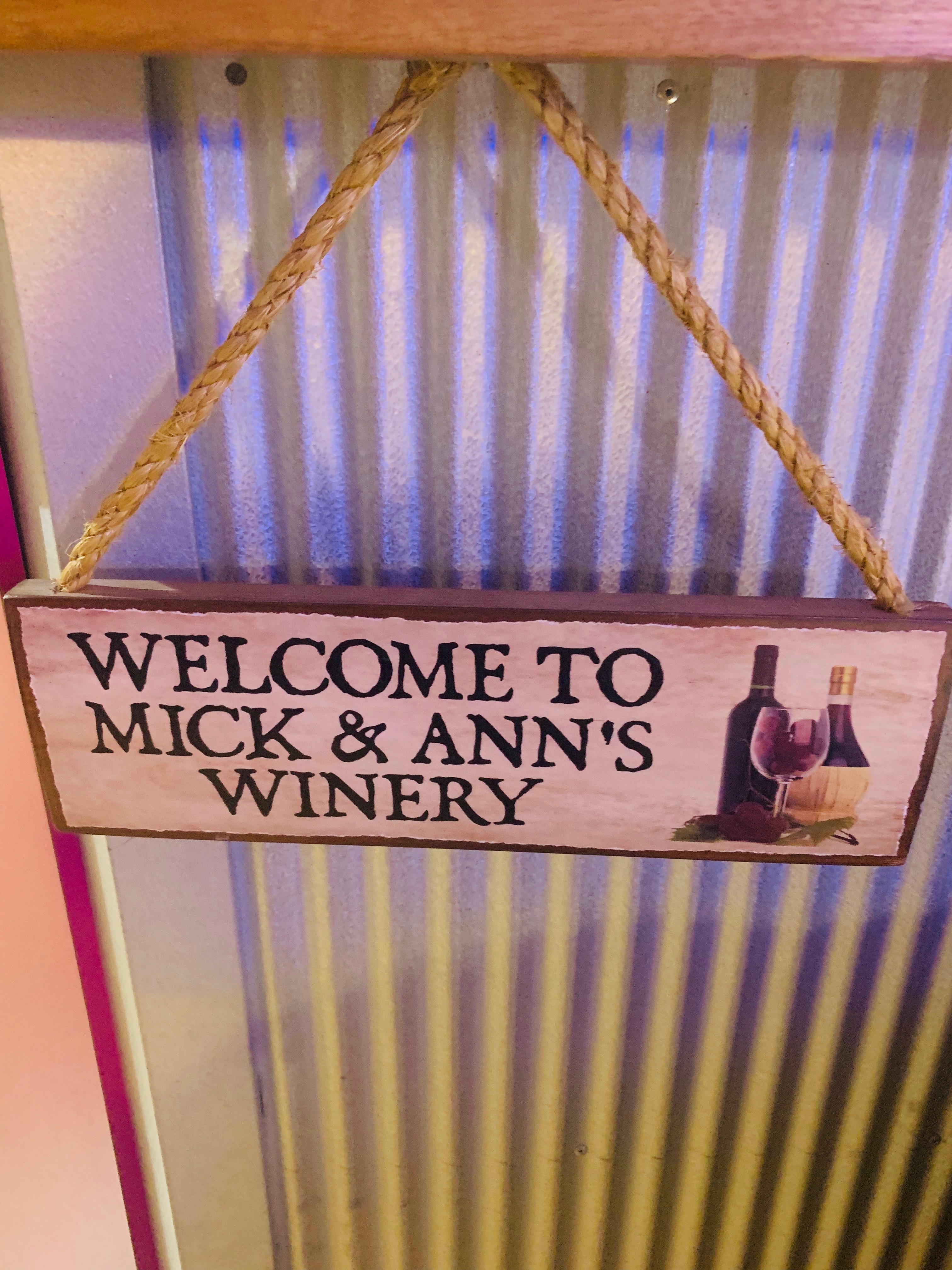
The sun has plunged below the horizon by the time I arrive at Jester Hill Wines owned by Mick and Anne Bourke, a couple of motorcyclists who went for a ride one day and ended up buying a winery.
I sip on a Strangebird Sparkling Roussanne, one of only three in the world, while a bubbly Ann reflects on the drought.
She’s been back working full time as a nurse to simply cover the vineyard’s $2500 a week water bill.
“We’ve just had to look at the drought in every positive way and make it work for us. At the end of the day we are here for the long haul,” she says.
“It’s not even about covering our vintage for next year, it’s about looking after the vines and creating an environment that people want to come for.
“For us, our story is always a positive story. What brings people here are positive experiences.”
And positive they are. Dine here on local produce such as Mallow Organic Lamb, feast on the region’s cheese, eat fruit plucked straight from the orchard, and try the Two Fools Trinculo or the Triboulet.
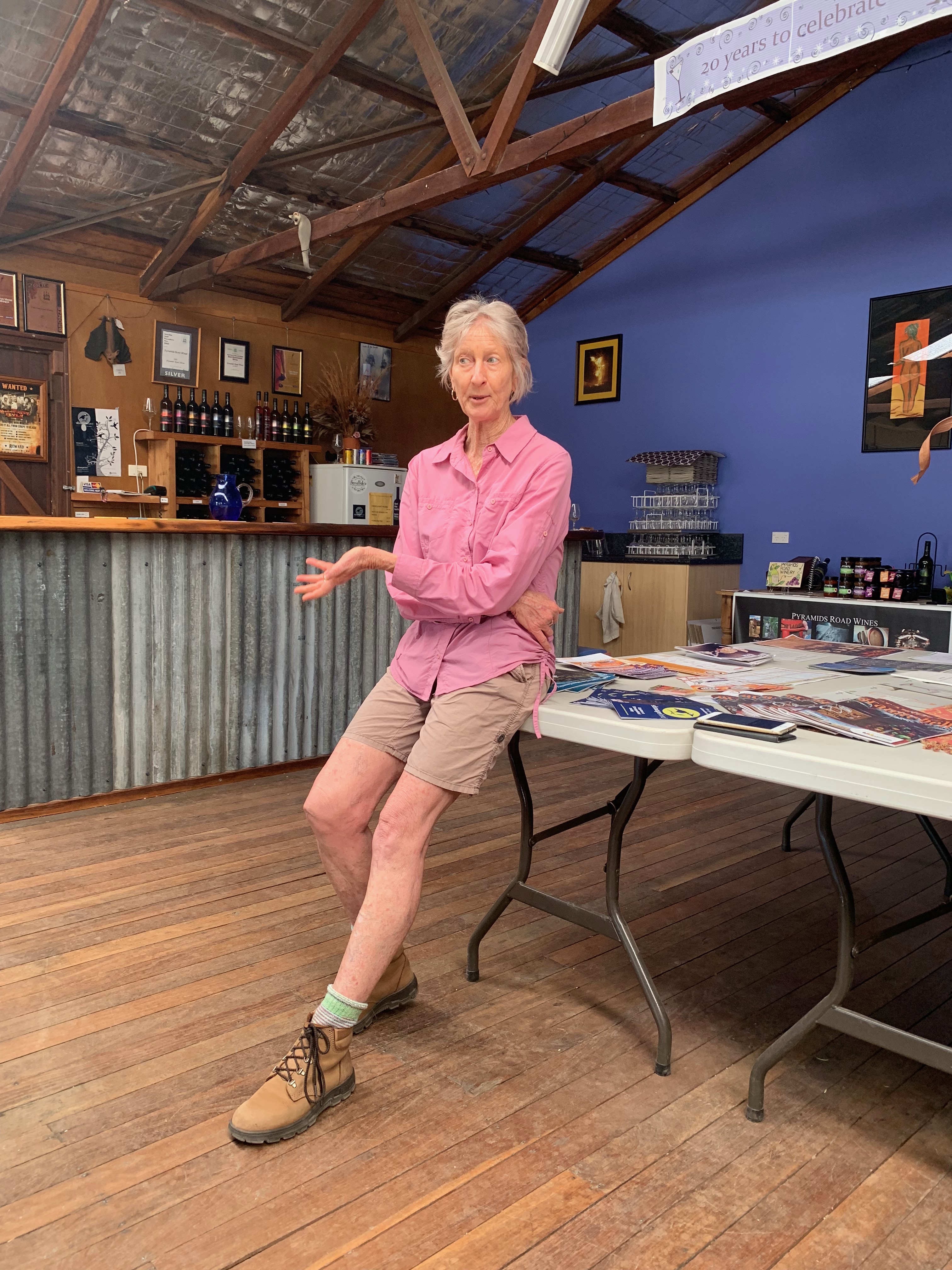
Girraween National Park Ranger Sue Smith, who owns Pyramids Road Wine with her husband Warren, leans like a laconic Queenslander, her heavy walking boots firmly planted on the original timber floor of her cellar door, and talks about the “emotional connection” she has with her winery.
“We are striving for quality. Nothing goes into that bottle unless we believe it is going to sell. Grapes will grow themselves but good grapes, you need to look after,” she says.
“This year is going to be very challenging. We are hoping all the work we’ve done in the vineyard is going to help them survive. We’ve also done a lot of composting and mulching.
“We need tourism badly. The small amount of water you are going to use here is nothing.”
Old-style chardonnay lovers with adore the 2018 Barrel Ferment Chardonnay here.
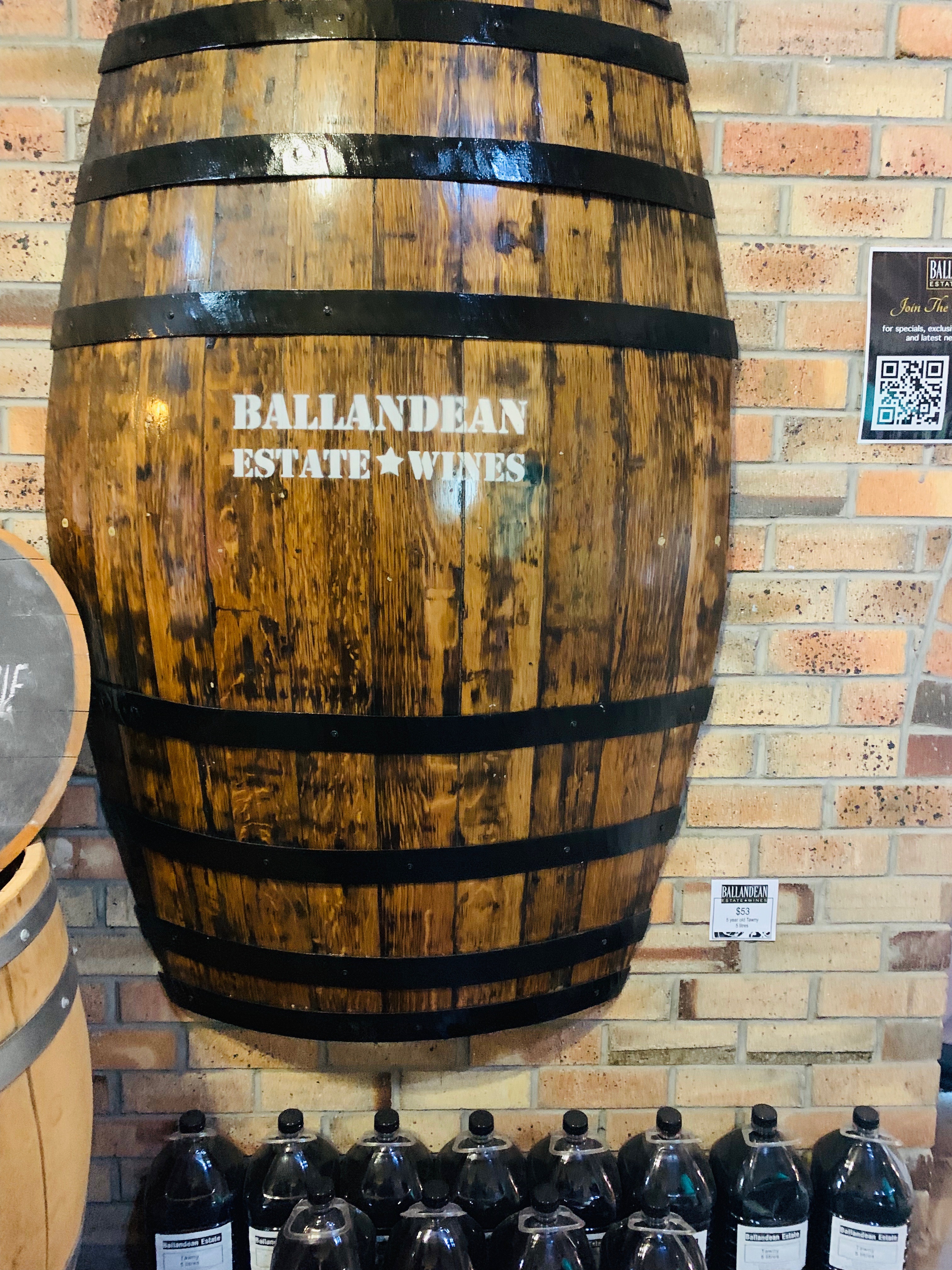
At Ballandean Estate Wines, the region’s oldest and most renowned wineries, Leanne Puglisi is straight-shooting about the year they’ve endured.
“We started in 1928 and this is probably the toughest year we’ve experienced as a family. It is quite scary the decisions we are having to make with the drought,” she says.
“Our region can do lots of things well. For so long the Granite Belt was left to do what it wanted to do and we love to do what we want to do.
“The general public just assumes that Queensland is all beaches, but we have the highest wine altitude in Australia.”
A heavenly highlight of a visit here, apart from the award-winning wine (try the “Messing About” Fiano) is dining on traditional Italian fare in the Barrel Room Restaurant among 150-year-old port barrels.
Across the road, Golden Grove Estate’s Raymond Costanzo, who is also 2019 Queensland Winemaker of the Year, says their story is all about alternative varieties such as the Tempranillo, Nero d’Avola, Malbec and Durif.
“The last five years has been about having fun, breaking out and playing around with tastes and food,” he says.
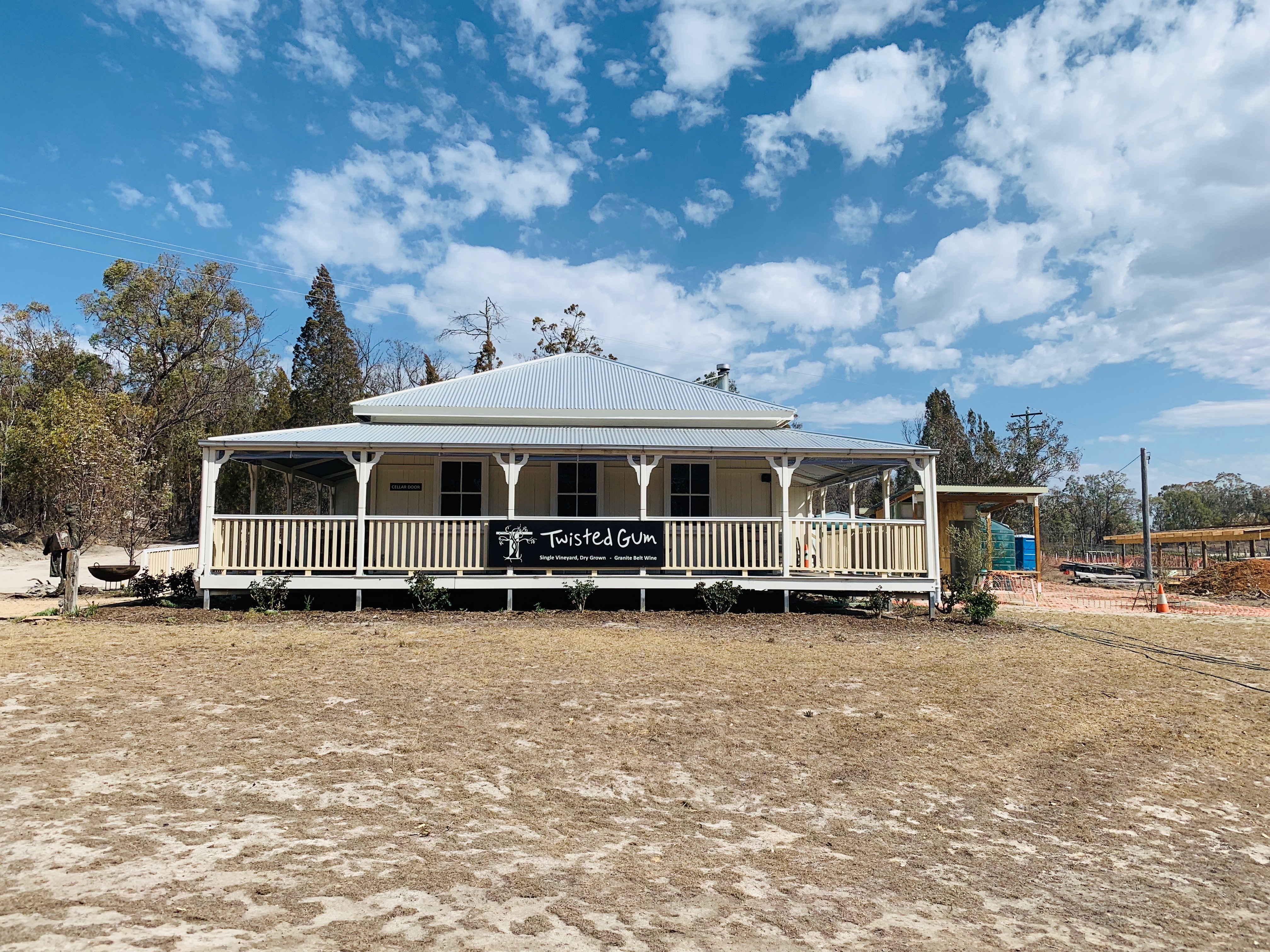
It’s a similar story of ingenuity at Twisted Gum Wines where Tim and Michelle Coelli produce single-vineyard, non-irrigated wines.
“I feel that we are in a slightly better position than vines that have been irrigated a lot,” Michelle says.
“Our vines have a deep root system. They are very in tune with seasonality. They are very resilient and opportunistic.”
Sit in this tin and timber Queenslander and sip on the likes of Verdelho/Semillon and Shiraz Rose.
At the adjacent Hidden Creek Winery and Café, ducks are paddling in the remnants of the dam but the 2018 Queensland Winery of the Year powers on, diversifying from old-style wines into more hardy grapes such as Tempranillo and Viognier. This huge-hearted winery also donates $2 from every glass of wine and $5 from every bottle they sell to the Rural Fire Brigade.
Hot winds are fanning another bushfire south of the border at Tenterfield by the time I arrive at the Queensland College of Wine Tourism (QCWT). But amid the acrid smoke in the air, there’s optimism galore. Nearby, a kookaburra laughs outrageously, as if he knows everything is going to be OK.
QCWT CEO Peter O’Reilly says there is already so much growth out of the fire scar in the area.
“Once we see a couple of storms go through, this place will leap out of the ground,” he says.
“There are a lot of really great pictures and encouraging signs in that regard.”
So passionate is QCWT about Queensland as a wine producing region, it is home to the “vineyard of the future” in which 70 different varieties of grapes are being trialled to determine which will perform better in extreme climate conditions.
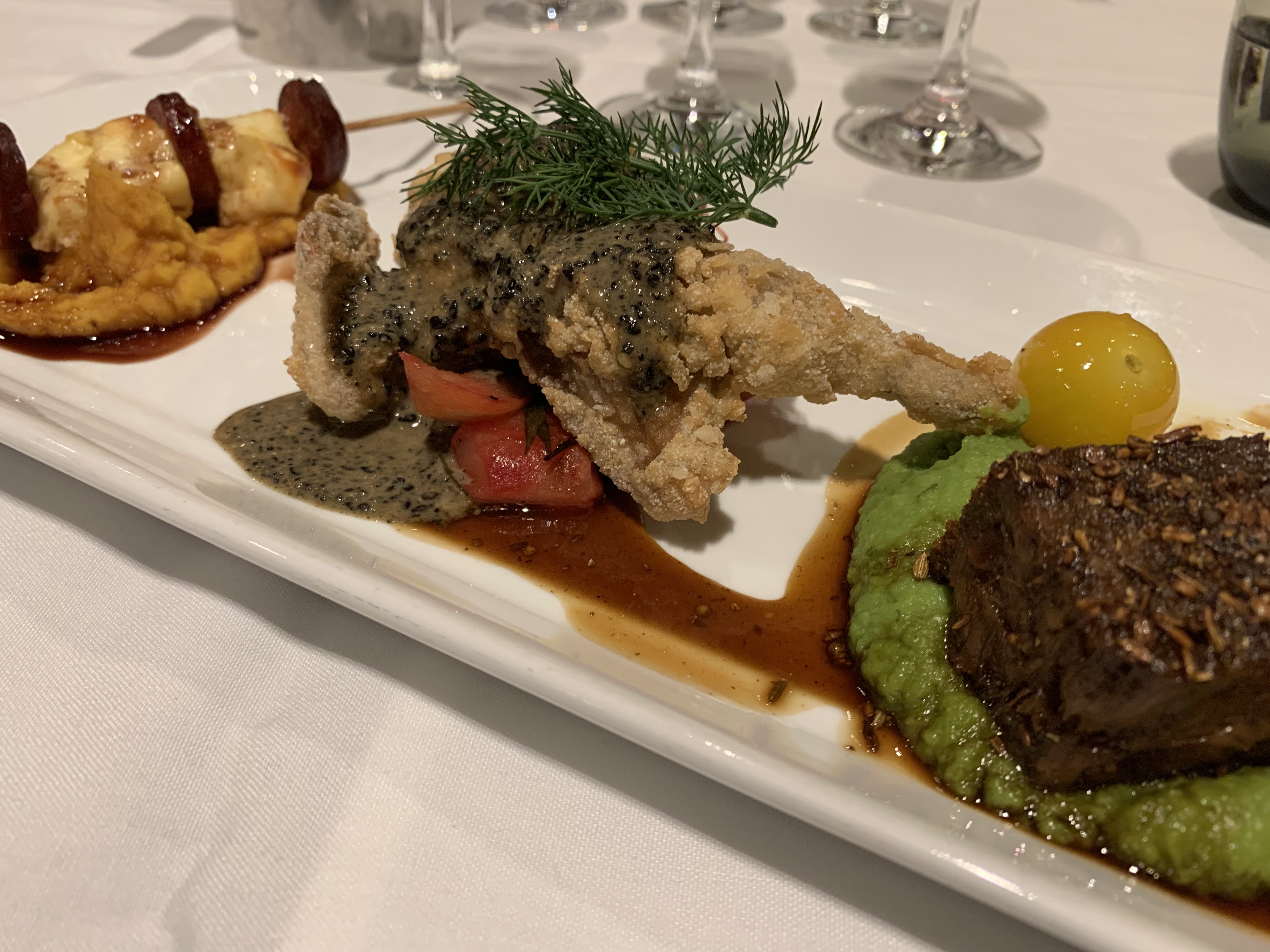
It’s a sentiment being echoed back in Brisbane at Sirromet Wines, whose 105ha of vines are grown out at Ballandean, and which is poised to plant 15 new varieties to meet climate change challenges.
“I have a strong belief that Queensland wine will dominate not only in Australia but across the world,” says wine maker Mike Hayes.
“We are acting on the Granite Belt crusade. The good thing about the Granite Belt is that it is relatively new.
“Queensland has got the ability to showcase the varieties to the world. We are not tied up in tradition. We’ve shown the world it can be done.”
The Global Goddess stayed at Grovely House Bed and Breakfast https://grovelyhouse.com.au
And travelled as a guest of the Queensland Wine Industry Association https://queenslandwine.com.au
and Granite Belt Wine and Tourism https://granitebeltwinecountry.com.au
This post was created in partnership with Southern Queensland Country https://www.southernqueenslandcountry.com.au
Tag: Southern Queensland Country
Have Yourself A Merry Little Christmas
I’ve been to Nice and the isle of Greece
where I sipped champagne on yacht,
I moved like Harlow in Monte Carlo and showed ’em what I’ve got.
I’ve been undressed by kings and I’ve seen some things that
a woman ain’t s’posed to see, I’ve been to paradise…Charlene (1977)
FOR me, Christmas is a time to reflect. It’s when I briefly stop travelling, slow down and glance back on the year. It would be so easy in my job as a travel writer to stumble from destination to destination and chase the rush of the next story and adventure, discarding the last place I’ve visited as simply a fuzzy memory. Recently, while filing a piece to camera for my colleagues over at TravelThereNext, I was asked what I “collect” on my travels. And it’s pretty simple. I collect characters. Ordinary people doing extraordinary things in every corner of the planet. I try to capture them in my stories and in the quiet corners of my mind. Store them up for those rainy days when I need reminding that the world is truly a remarkable place. And so I present to you some of the great characters I’ve met of 2014.
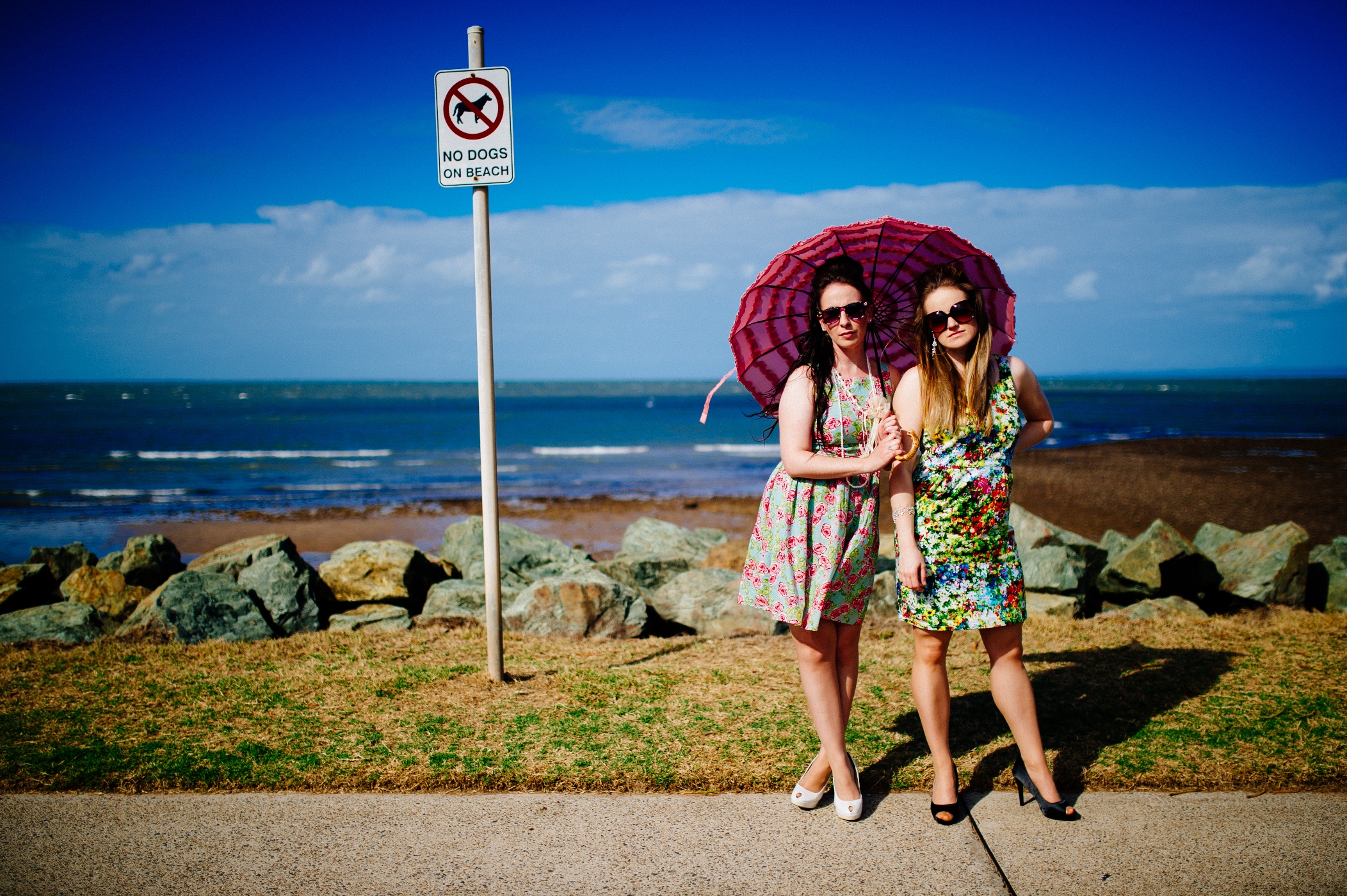
First World White Girls, who performed at the Judith Wright Centre, reminded me of how fortunate I am.
I began my travelling year in Bali in January where I met Cekorda, 85, a respected medicine man. “How old are you?” he asks as I sit with my back against his knees, his wiry fingers probing my skull. “43,” I respond. “Not so young,” he mutters to himself, much to my amusement. He then asks me my problems. “I have a broken heart,” I reply. I lay down on a mat and he presses between my toes with a stick. My third toe on my left foot hurts and I yelp. “Your broken heart is healed. It is your mind. You have self doubt.” Cekorda then stands above me and traces his magical stick over my body to clear my aura, before announcing that I no longer have a problem. He turns to an Western bystander who speaks Indonesian. “Women are very complex,” the bystander translates for Cekorda. I laugh all the way from Bali back to Brisbane.
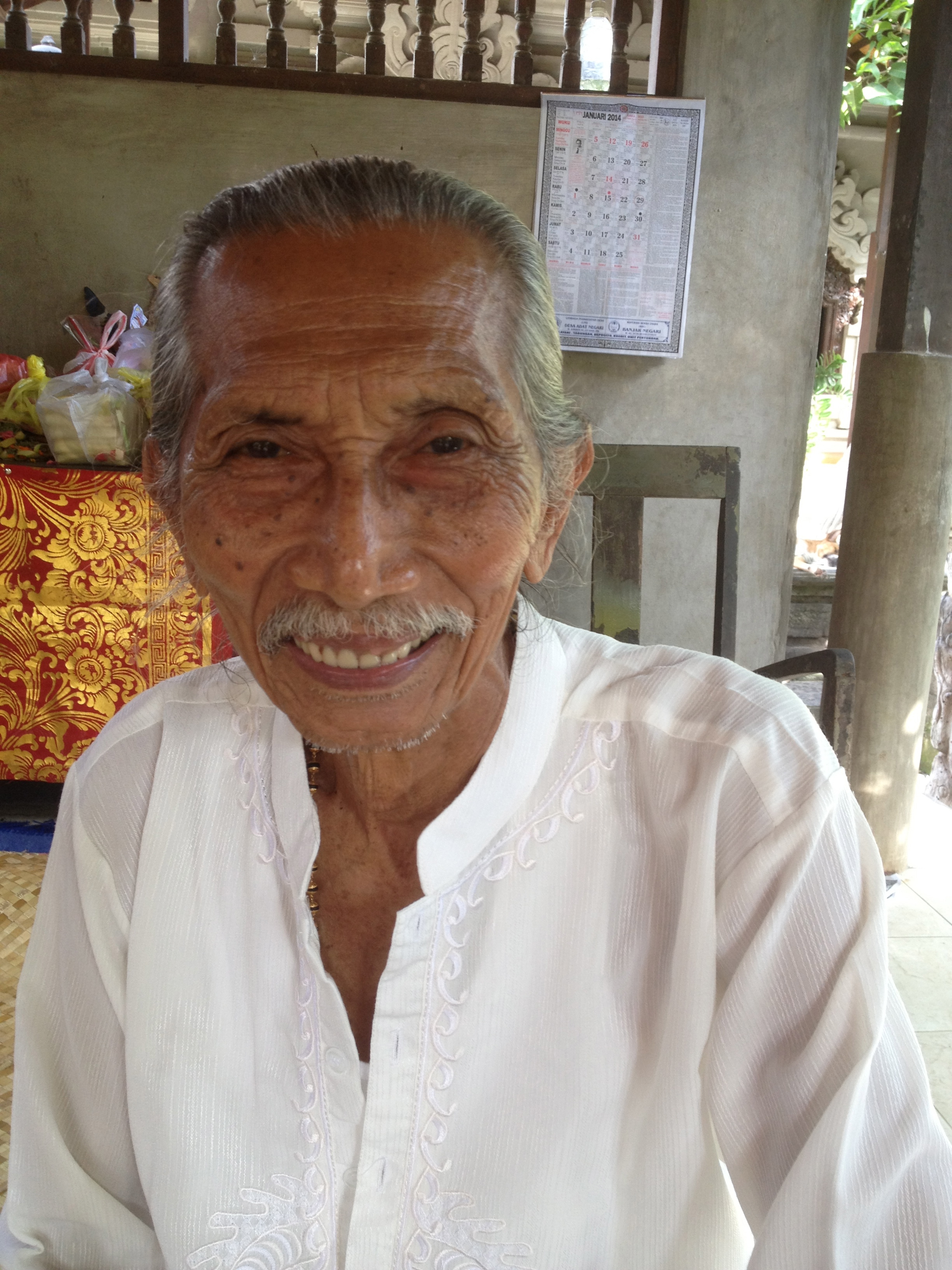
Bali medicine man Cekorda
In February, I’m up in Thailand, where I return to the River Kwai and meet up with my young friend Sam Season, a traditional Mon Man who works on the River Kwai Jungle Rafts. Sam has two big dreams: to gain an apprenticeship as a mechanic in Australia and to marry the love of his life, Jaytarmon who lives in a neighbouring village. I ask him whether this mysterious girl with the long black hair is still beautiful. He doesn’t hesitate. “Oh, awesome. I want to listen to her voice.” He pulls out his iPhone until he finds a photo of her, laying dreamily on a bed with her hands in her chin. “I look at her photo every night before I go to bed. I have to make her believe in myself and trust in myself. When I finish my education I will be ready. I have to show her ‘can you wait for me?’ One day, when I have an education we will have a good life and then we will marry.”
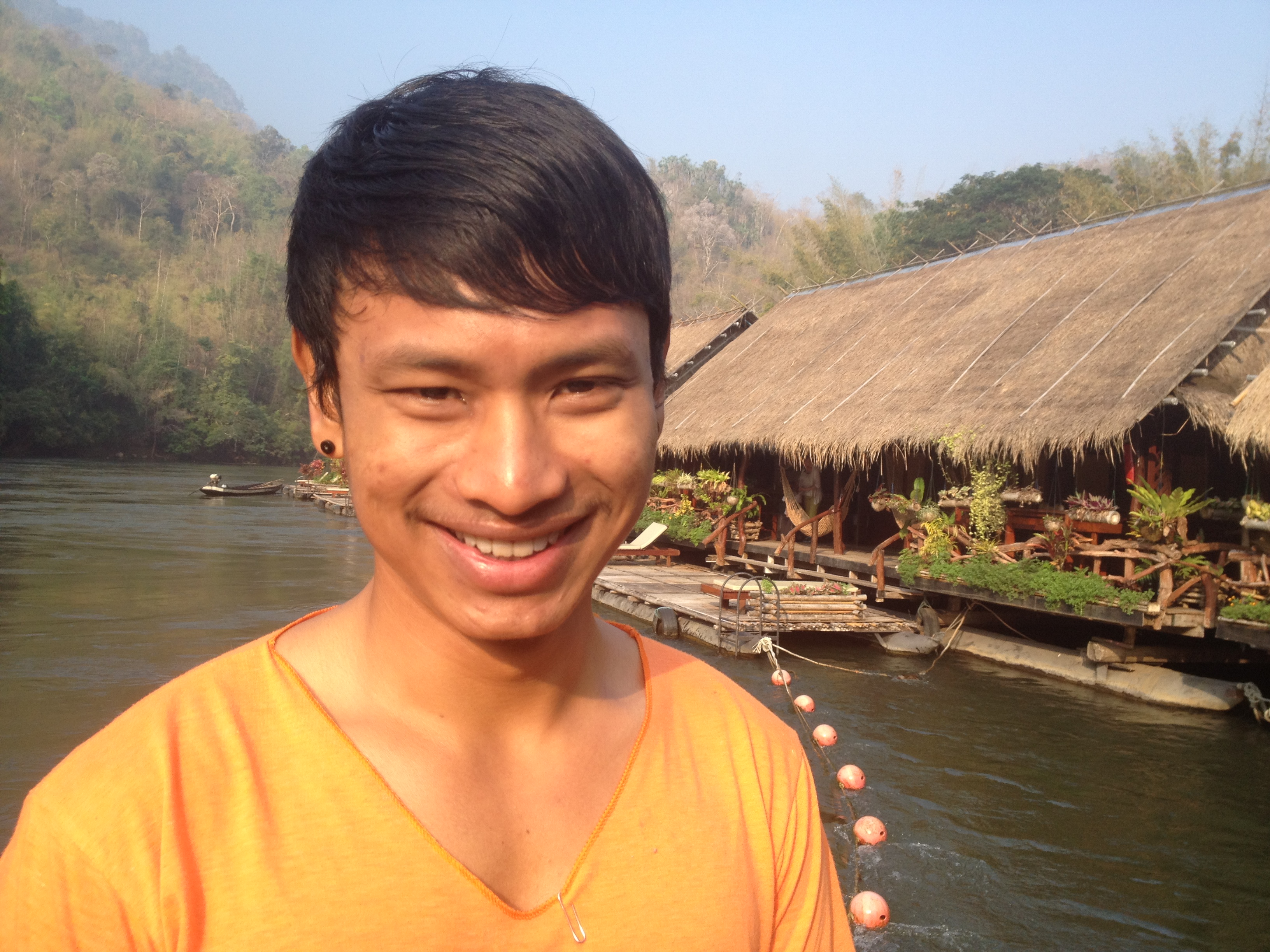
Sam Season
March finds me back in Brisbane, struck by the sadness of the drought which is consuming my country. My journey takes me a few suburbs away where I catch up with Tom Conley, 3, who was born just before the 2011 Brisbane floods and ironically now bakes for drought relief with his mum, Sally Gardner. “Tom gets involved in all the cooking adventures in our home. He especially loves baking and as soon as I get the utensils out he rushes over, climbs up and wants to measure ingredients, crack the eggs and lick the bowl, We talk about who we are helping or who we are baking for, he enjoys drawing pictures for the drought-affected families.”
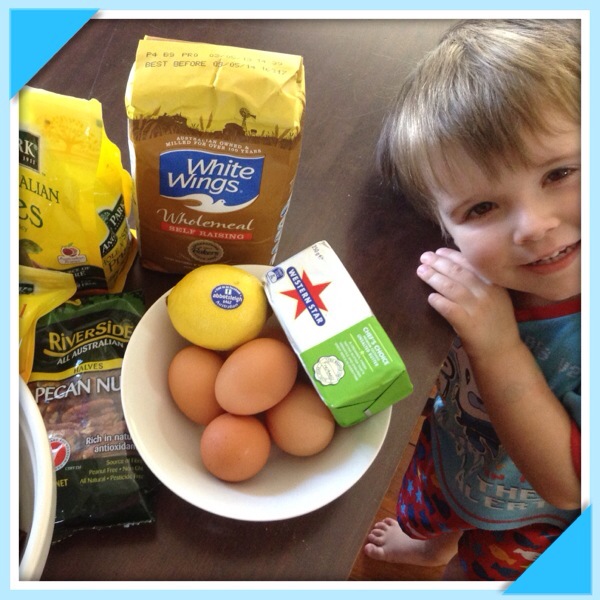
Tom Conley
In April I return to Bali, to spend Easter alone at a yoga retreat and to recover from yet another disappointing relationship. Purely by chance I select OneWorld Retreats Escape The World program in Ubud where, along with twice-daily yoga sessions, I am challenged to sit with myself for one glorious day of silence. Claude Chouinard, who runs the retreat with his partner Iyan Yaspriyana, reminds us that despite everyone around us seemingly being able to travel, we are only a small percentage of the world who is wealthy enough to do so. He encourages us to embrace our 24 hours of silence and see it for the gift that it is. “For just one day you can consider this silence a form of torture or one of the greatest gifts you’ll ever give yourself. What we know as time is in fact an illusion. For human beings, time is limited to the moment we are born, to the moment we leave this planet, a very short journey considering the age of the universe. Live every day by the minute and enjoy as much as you possibly can…the illusion goes by quickly.”
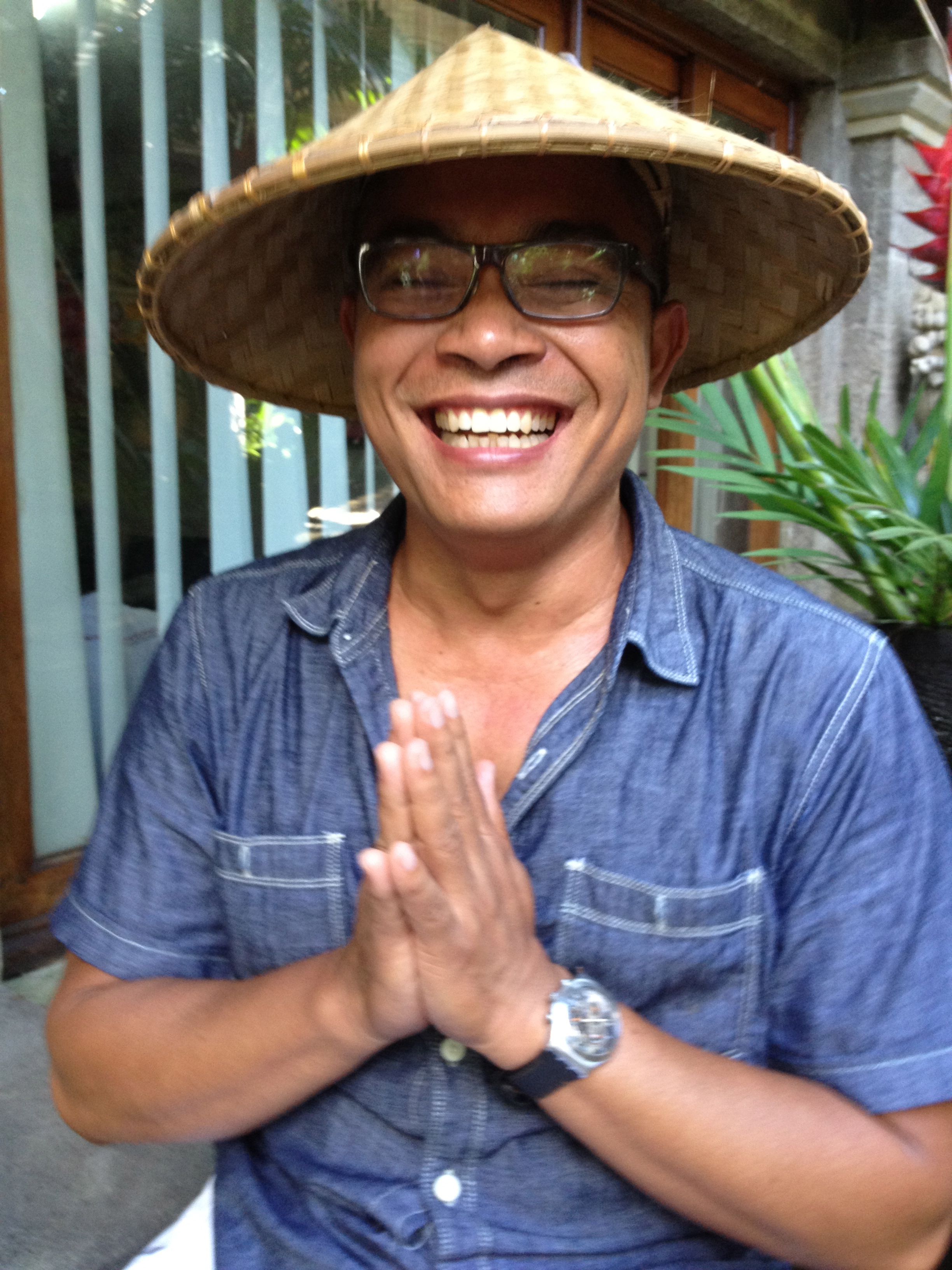
Iyan Yaspriyana
May is chaotic and colourful as I spend nearly a month in Europe chasing a range of stories. And I meet a range of those fabulous characters I so treasure….A sultry Slovenian who compliments me on my “good English” when I reveal I’m Australian; Skanky from Mumbai who eats one gigantic meal a day as he doesn’t wish to “get sick on German food”; Suzie, the Filipino Canadian whose love of Schnitzel knows no bounds; Calamity Jane from Chicago who wanders the streets of Berlin pointing at every single wall and asking our tour guide whether it is a piece of the Berlin Wall; and a jolly gay guy from Wales.
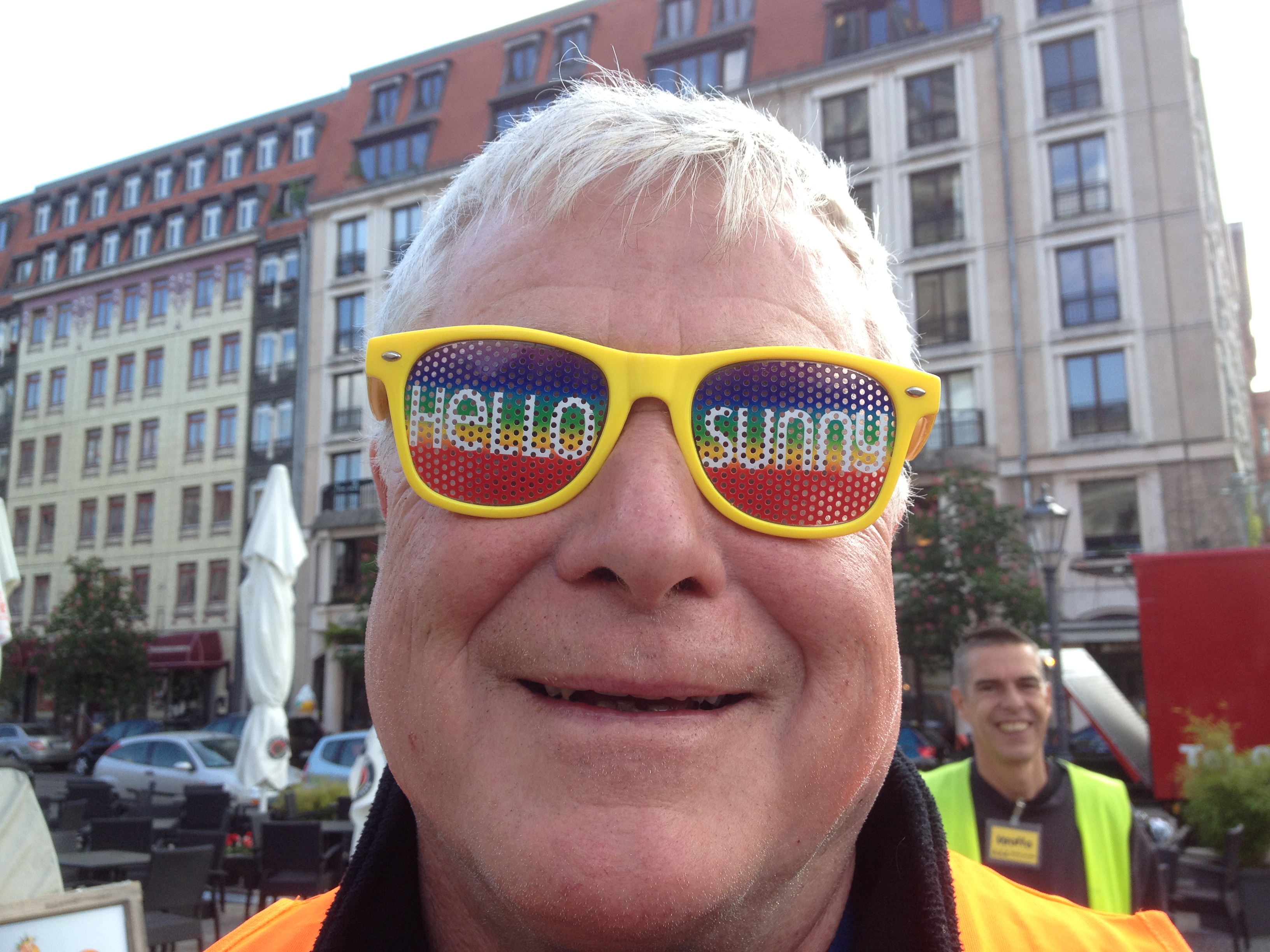
A bold Berliner
June is spent in Christchurch, which was devastated in February 2011 by an earthquake in which 187 people were killed and 1000 buildings destroyed. At the C1 Espresso café I speak with owner Sam Crofskey, 37, who not only lost his original café across the road in the quake, but his house as well. Sam was working in his high street café when the earthquake hit. “I was a little bit confused. The coffee grinders fell off and landed on my legs and the power went off and then I could hardly stand. We needed to get rid of the customers, the staff and then ourselves. We had more than 100 people in the café at the time. Out on the street everyone was distraught and I thought everyone was over-reacting. I thought we’d come back tomorrow and clean everything up. It took a lot more for me to understand the city was actually gone. When you are here with no power or phone you have no idea what’s going on. I was like, my business if fucked, my house is fucked…that’s annoying.”
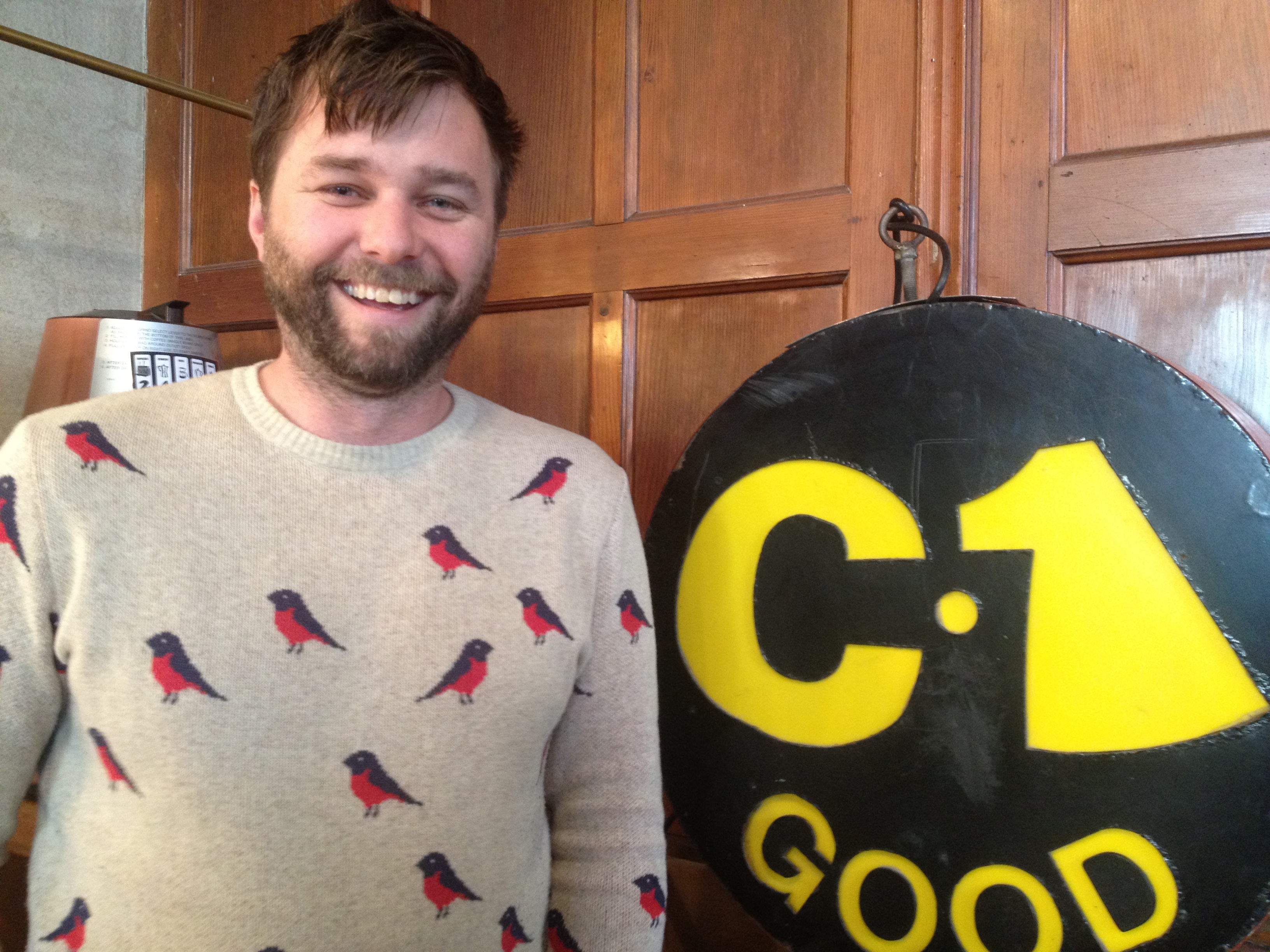
Sam Crofskey
The mercury had plunged to minus 2 degrees out in Southern Queensland Country in July when I ventured to the Dalby Cattle Sales in search of myths and men. I spend two hours chasing cattle and cowboys around the cattle yards before I decide to leave. On the way back to the car, I hear a voice behind me. “So, have you got your story?” a cowboy says, following me quickly out of the cattle yards. “Yep. I don’t have all morning to be chasing you boys around,” I say defiantly. “Where are you staying tonight?” he directs this question at my breasts. “Chinchilla,” I say. He stands and considers this for a moment, calculating whether I’m worth the hour drive to the next town. And just as I’m about to turn to leave he says: “Well, I guess I’ll see you around then.” The interaction keeps me entertained for several days and hundreds of kilometres later.
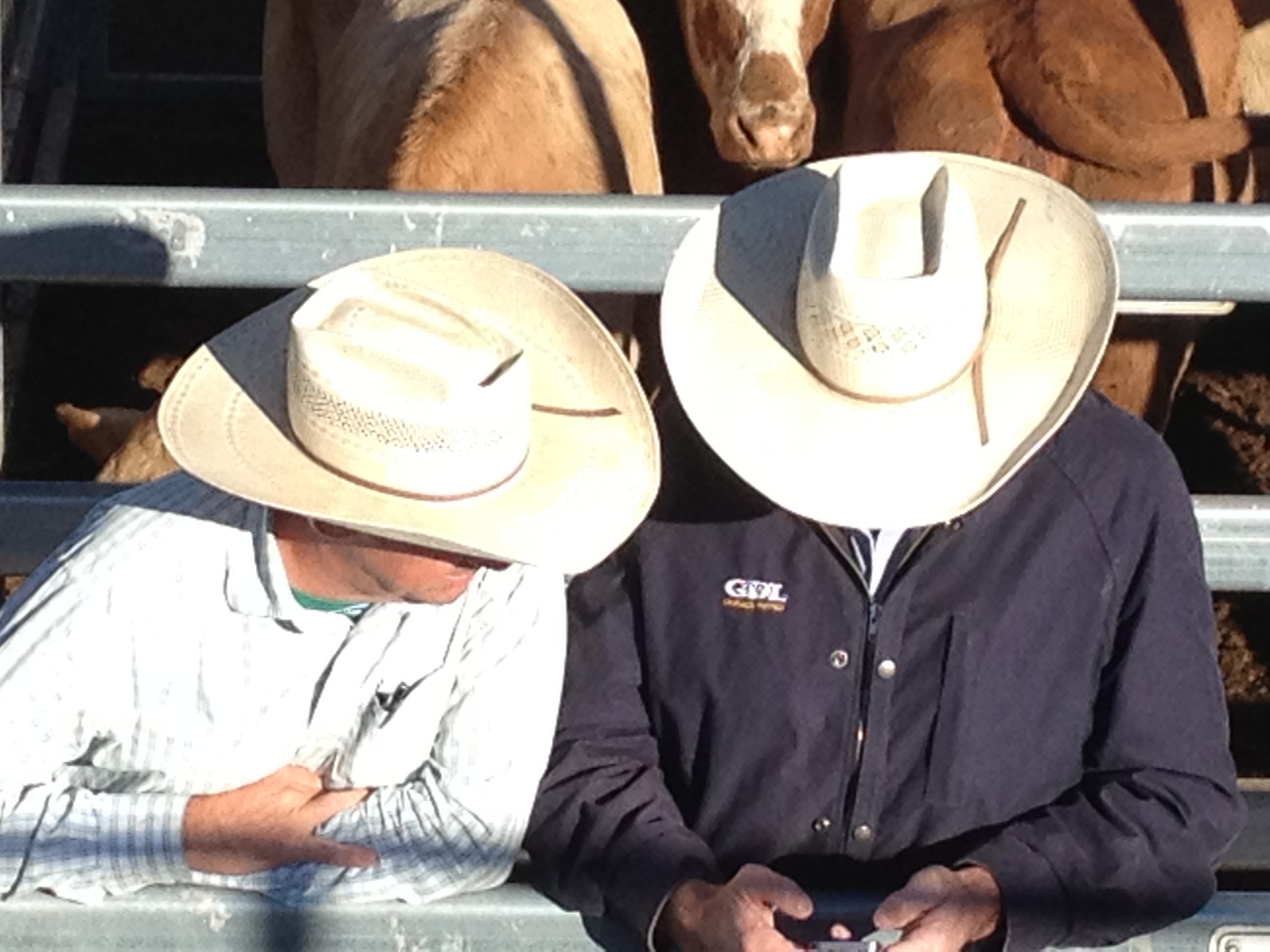
Dalby cowboys
I spend the most perfect August day with a close mate where we escape to the Sunshine Coast and the Eumundi Markets and Noosa. We stroll and laugh. Steal languid pauses to smell the roses, or in this case, the pungent soap on sale. Chat to a stallholder about his carnivorous plants. Try on eclectic outfits. Resist the seduction of sparkly jewellery. Wander through aisles of books. Observe the colourful characters. Pat a camel. We stumble across a “Willy Washer” and spend some time discussing its purpose. There’s a male fairy guarding some jewellery that resembles the young man selling the silver, fashioned from old knives, forks and spoons. An ancient typewriter has been dismantled, somewhat to our dismay, and crafted into trinkets. Colourful hand-woven handbags remind us of our travels around the globe. We discover Noosa Reds – plump, juicy tomatoes bursting with the distinct flavours of this fertile region – deliciously packed in crunchy brown paper bags. A giant gecko mural hugs a pole. There’s glass-blowing and some beaut ukes. And all the while, we keep winding through the marketplace, unravelling our lives.
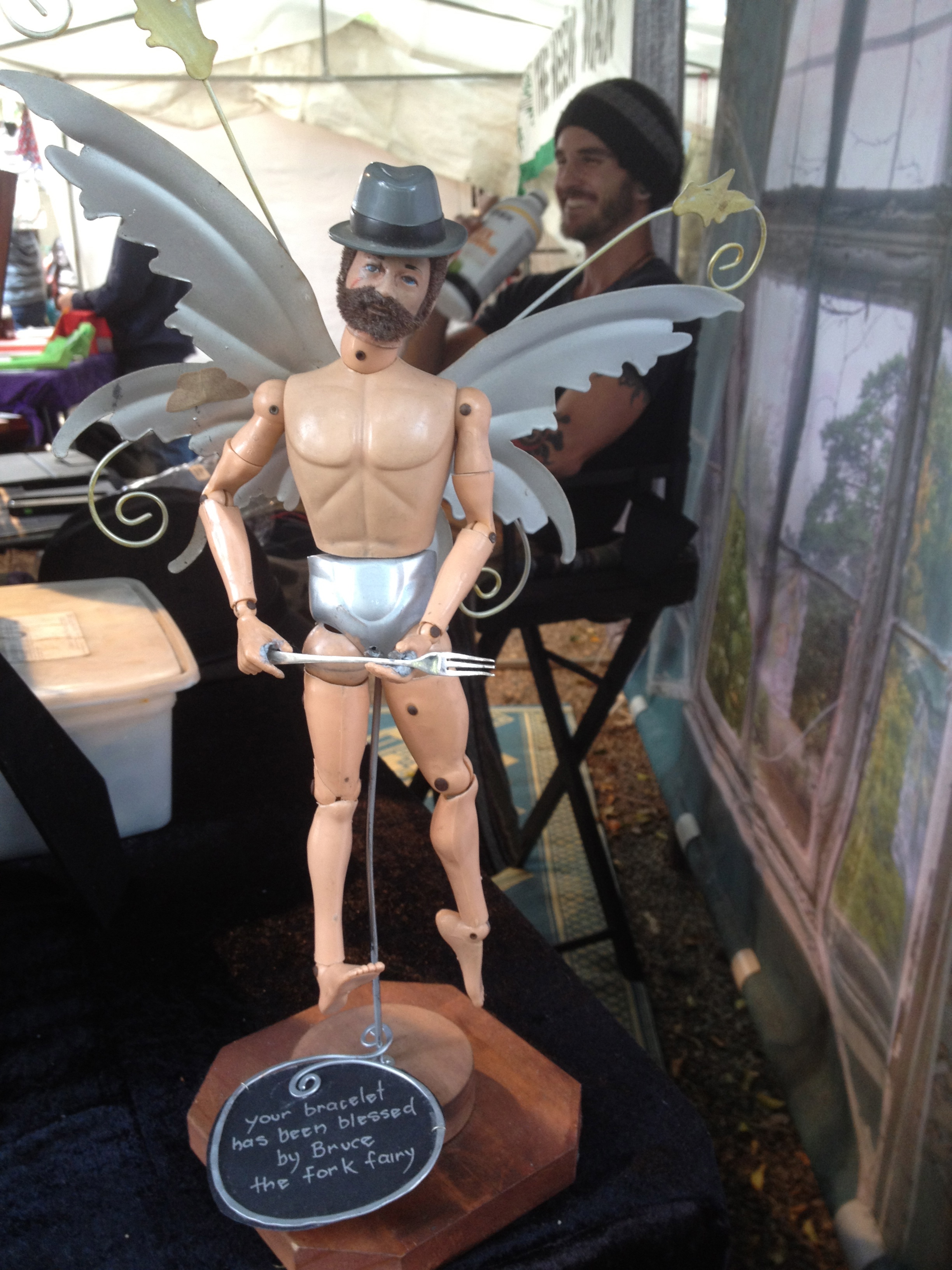
A Eumundi Fairy
On a stunning September afternoon I find myself staring at boobs and Broadbeach on the Gold Coast, at a High Tea to launch Kim McCosker’s cookbook Cook 4 a Cure to raise funds for the National Breast Cancer Foundation, and to celebrate the opening of Australia’s newest resort brand ULTIQA Resorts. Guest speaker Mark Wood volunteers his time to speak about breast cancer after losing his wife Annie to the disease seven years ago, and says one in eight Australian women will be told they have breast cancer at some stage. “Today, 37 women will be told they have breast cancer. To think that’s happening to 37 people today and the day after is far too many. And seven people would have lost that battle today. My wife got a death sentence but my daughter, who was 12 at the time that Annie died, got a life sentence losing her mother so young. Twenty years ago, 37 per cent of women diagnosed with the disease died, but that’s now been halved through awareness and education.” All of a sudden I feel tired and emotional, but as I furtively glance around the room, I find I am not alone. There’s not a dry eye in the house.
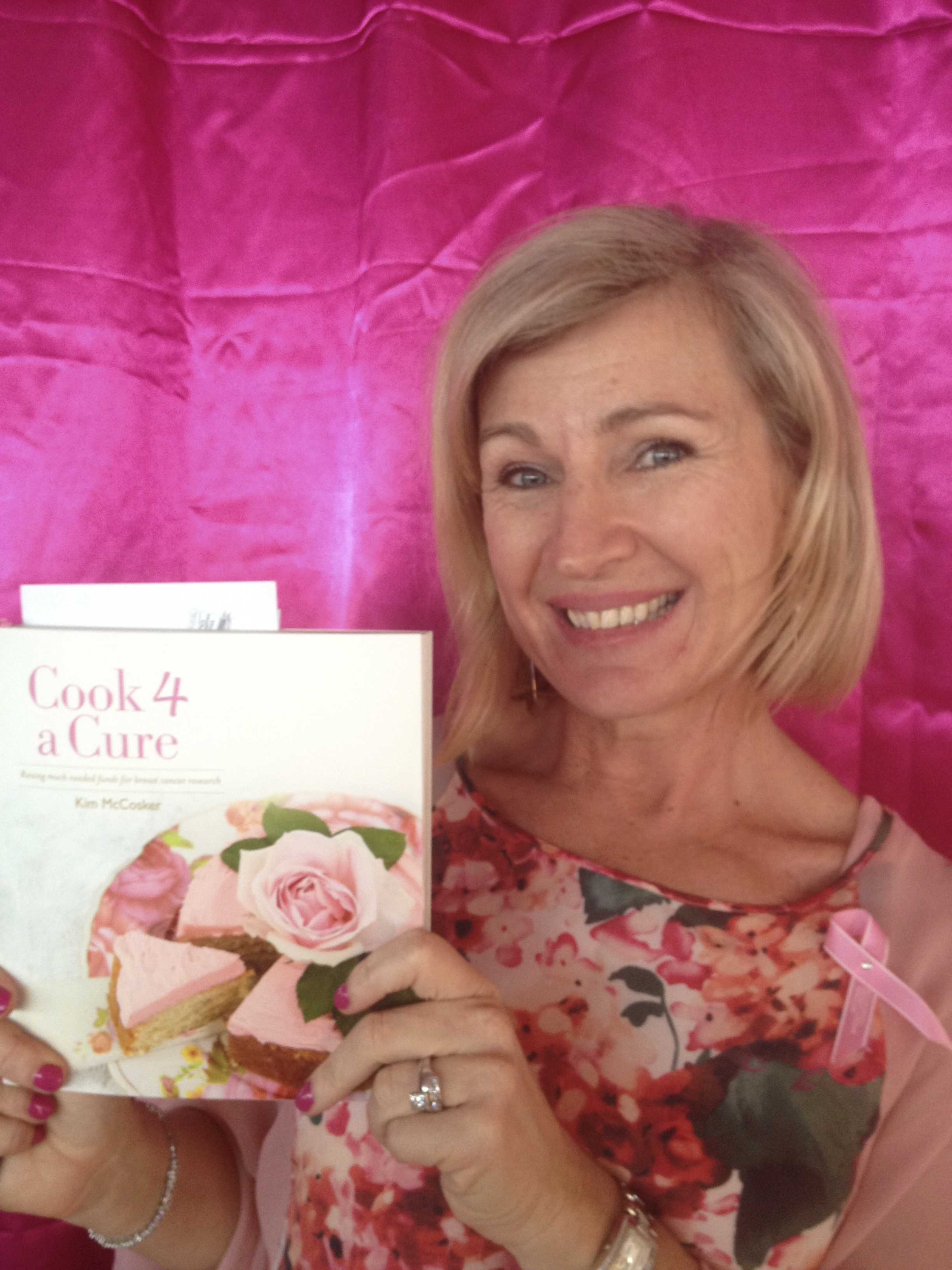
Kim McCosker
October was spent in Fiji at the Australian Society of Travel Writers Awards where I won Best Food Travel Story for a piece I wrote about a group of six hardcore Wellington prisoners who were being rehabilitated through a cooking program “From Prison Gate to Plate”. Talk about collecting characters. And the words of celebrity chef Martin Bosley, who runs the program, still ring in my head. “I didn’t realise what a loss of freedom truly meant before I went in there. As a community we need to change our perceptions and be prepared that one day these men are getting out and we need to pick up where prisons leave off and reduce re-offending.”
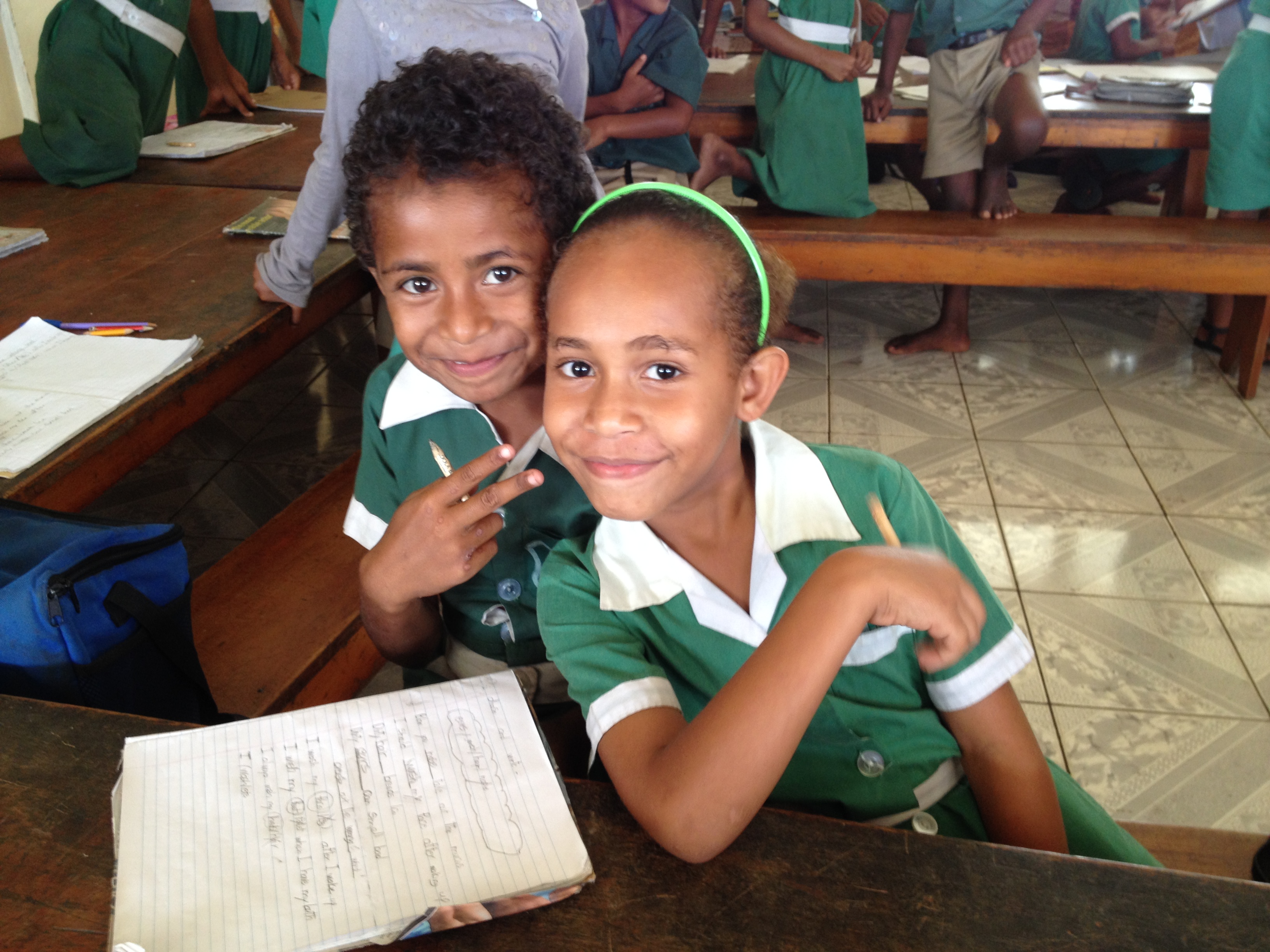
Fiji School Kids
I returned to Hawaii for the first time in 22 years in November, where there were characters galore including the mythical menehune. Sheraton Kona Cultural Tour Officer Lily Dudoit explains these little red men. “Everywhere in Hawaii we are known for our myths and legends. We have the little people who only come out at night to do their work. We call them Menehune and they are said to have reddish skin colour. There was a couple who had their wedding photo by this tree and when they had the photo developed there was a Menehune peeking out from behind the tree. They like to make trouble. Sometimes things go missing or they move something. You don’t find them. They find you.” I spend the rest of my time in this land of rainbows searching for possibly the most intriguing men I will meet all year.
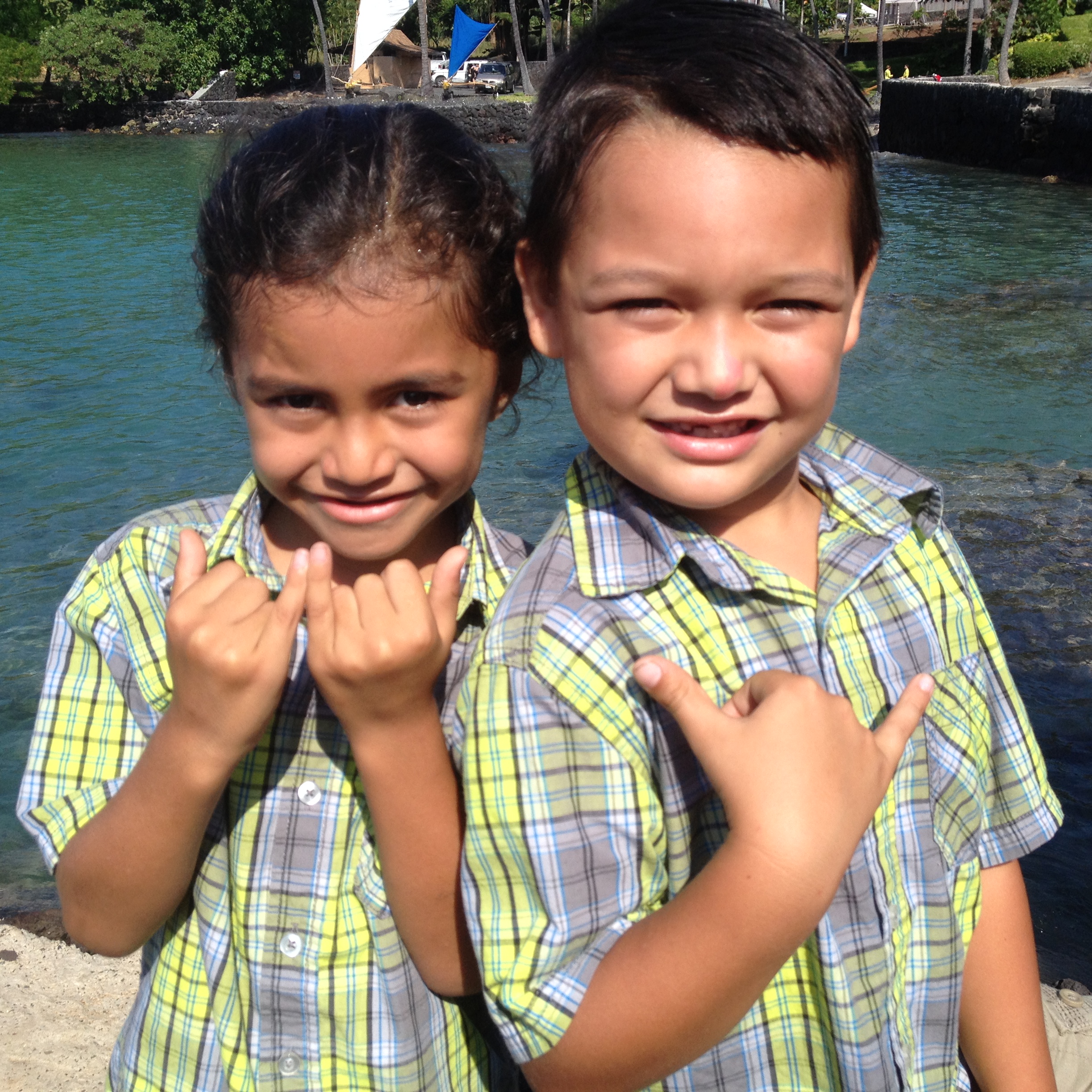
Hawaiian Kids
Which brings me to December. While many leave Brisbane and Australia, this is the time of year where I sit on my back deck with a cold beer and warm memories. There’s movies and coffees and catch ups with friends and family, the all-important support cast of characters in my life. Thank you to everyone I have met out there in the big wide world this year, to those who have come on the journey with me, and to those who continue to love and support me back at home. Sending you love and light this season and may we all experience peace on earth.

 The Global Goddess