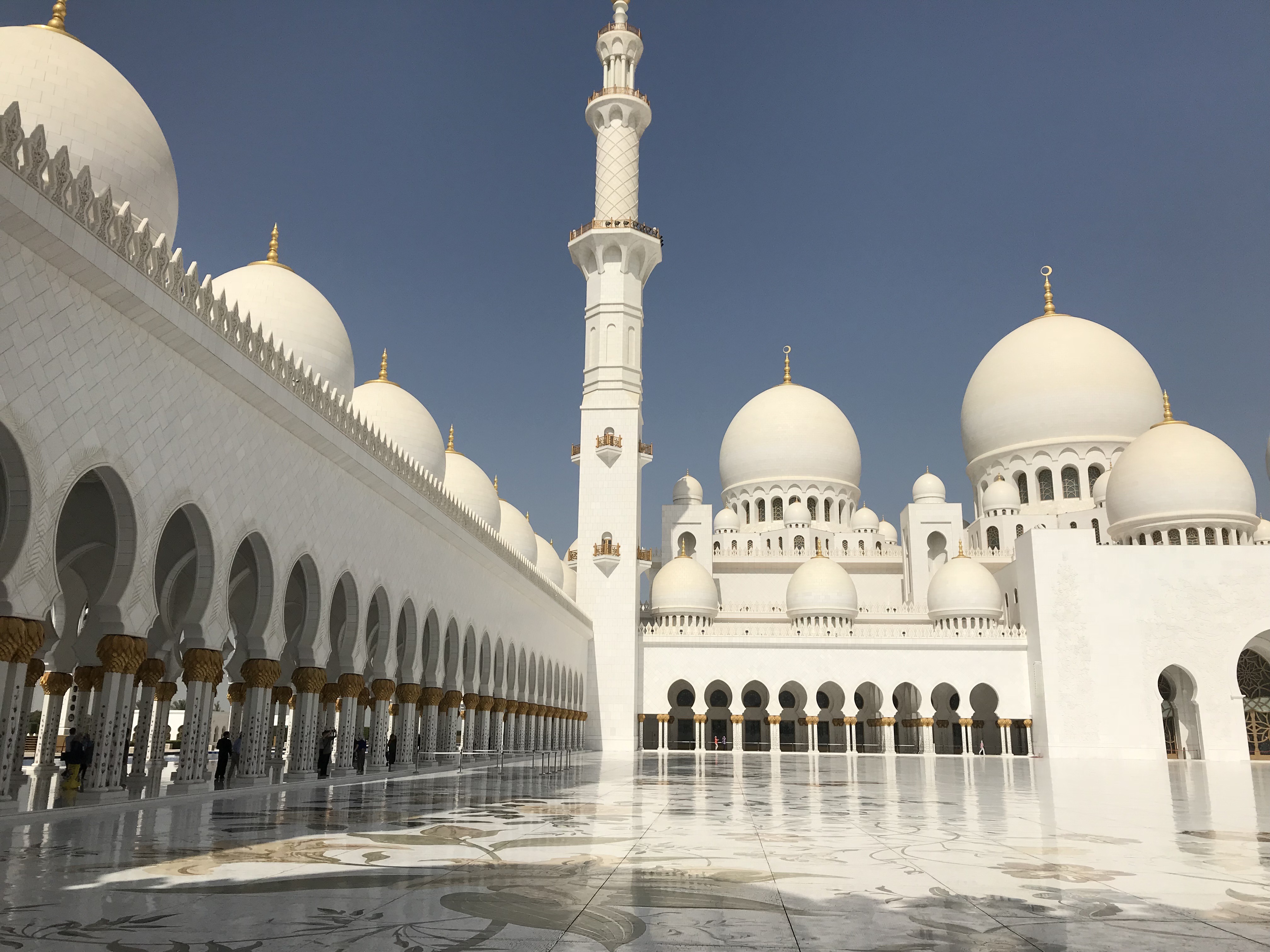
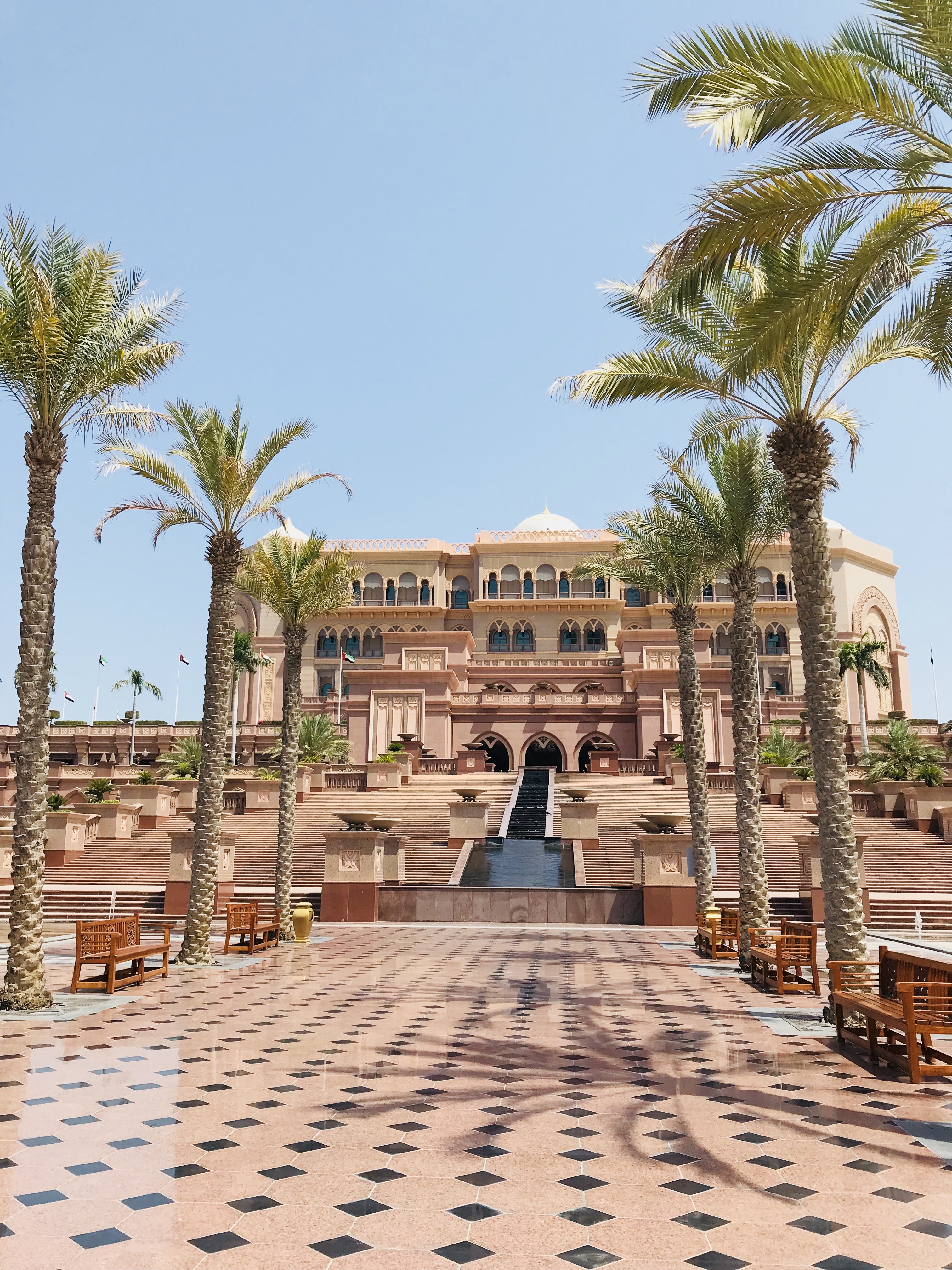
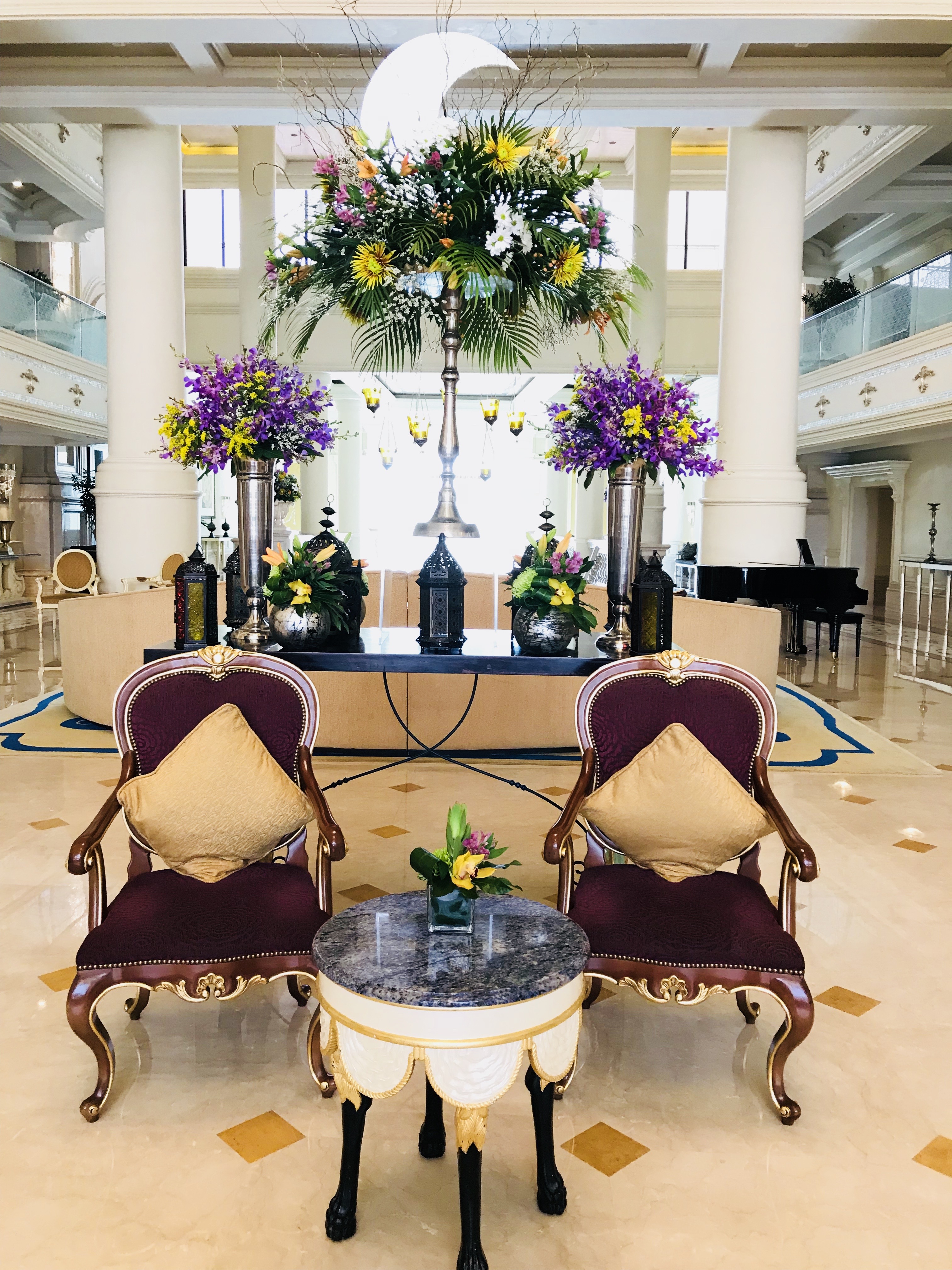
THE apricot sun is setting over a dusty desert sky and soon, the hauntingly beautiful Muslim call to prayer, which lured me outside the previous evening under a pregnant moon, will punctuate this balmy evening. It is Ramadan in the Middle East and I am on my way to an iftar, or breaking of the fast feast, at the sparkling Emirates Palace Hotel in Abu Dhabi and its grand “tent”, renowned as the best in town. There are dashing Arab men dressed in their crisp, white dish dashes and exotic Emirati women, all designer clothing, glossy, black hair and kohl-rimmed eyes.
I didn’t plan to travel during Ramadan, it’s just the way things fell, and before arriving, I am intrigued about what to expect. I am told I can eat, but not in public. I can drink water, but not in public. It is 40 degrees Celsius and I am running around in the heat, chasing stories. Luckily my private driver, Majith, is empathetic and behind the blackened windows of my vehicle, pours me water and sympathy. He even offers to buy me “best biryani” should I feel hungry. But I need not have worried, as while devout Muslims observe the rules of Ramadan (no eating or drinking before sunset), non-Muslims can eat and drink in designated areas, such as hotels.
Majith collects me for my final assignment, the iftar at the Emirates Palace and tells me I look like a Syrian woman in my long black dress with attached cape. Again, what to wear as to not offend? I need not have worried as the Emiratis are both modest and modern. I do, however, make one gaffe. I am at the feast, awaiting my host, and there is water on the table. Without even thinking, with one hand I am writing up some notes of the day, and with the other, I take a sip. A waiter hurries over and in a kind voice tells me I cannot drink until 7.05pm. Ashamed, I apologise profusely and grasp for the time. It’s 6.57pm.
On my flight to Abu Dhabi with Etihad Airlines, an article inside the inflight magazine Atlas catches my eye. Food & Travel Arabia editor Anisa Al Hawaj argues that Ramadan is the best time to travel to the United Arab Emirates as long as you observe the basic rules of not eating and drinking in public during daylight hours, and dressing conservatively.
“To paraphrase an edict from the Sheikh Mohammed Centre for Cultural Understanding, ‘If a non-Muslim gets it wrong and no offence to the faith was intended, let it go’,” Hawaj says.
“Come sunset, everything comes alive: the streets, restaurants, malls, night bazaars – the atmosphere is incredible. So, too, is the food. You’ll have as much fun as anywhere and at any time in this part of the world at one of the grand Ramadan tents in the UAE.
“Not just for the cooking, but the service, the people, the whole vibe. I like to say it’s Arab hospitality at its best. And it comes but once a year.”
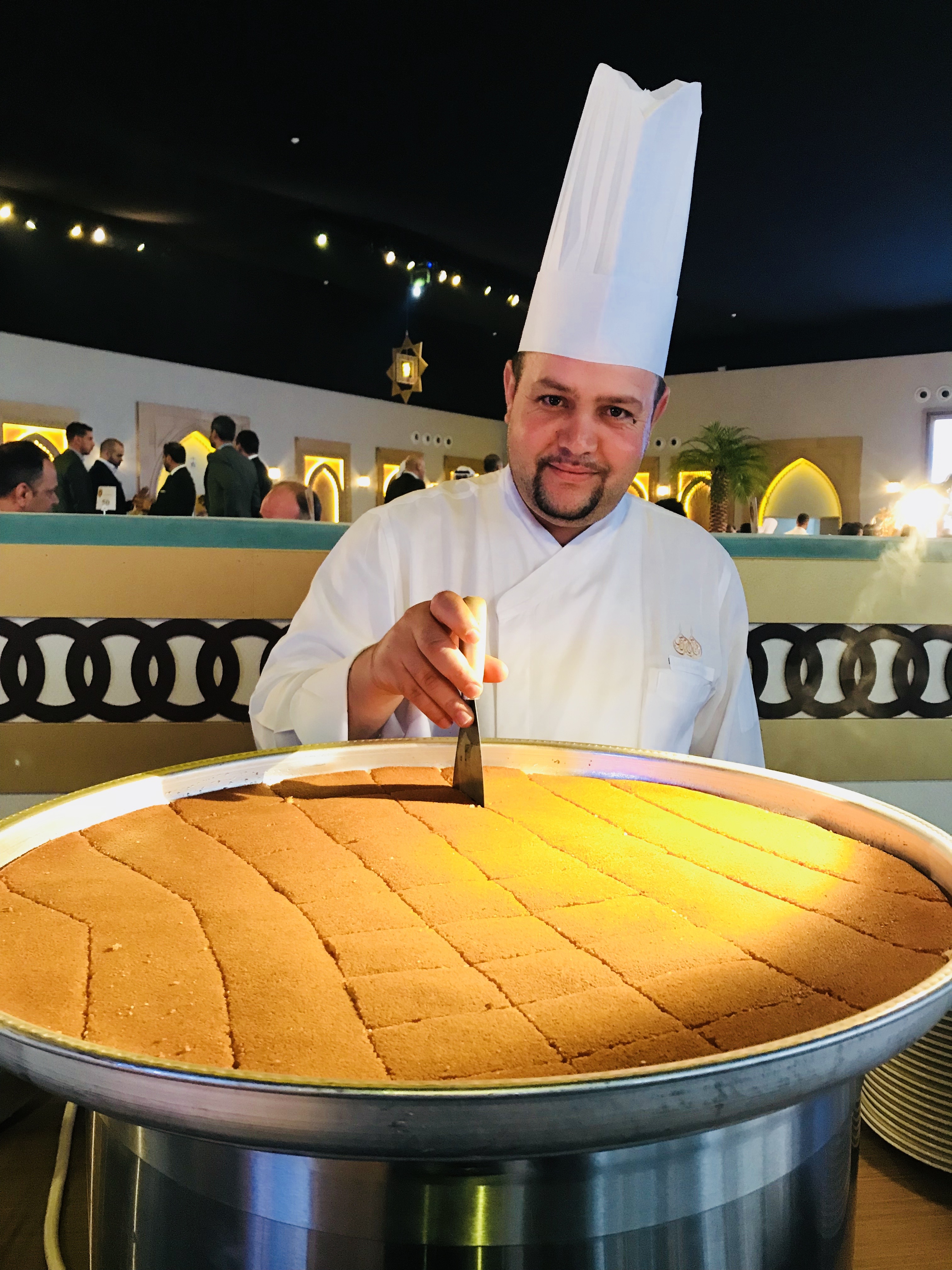
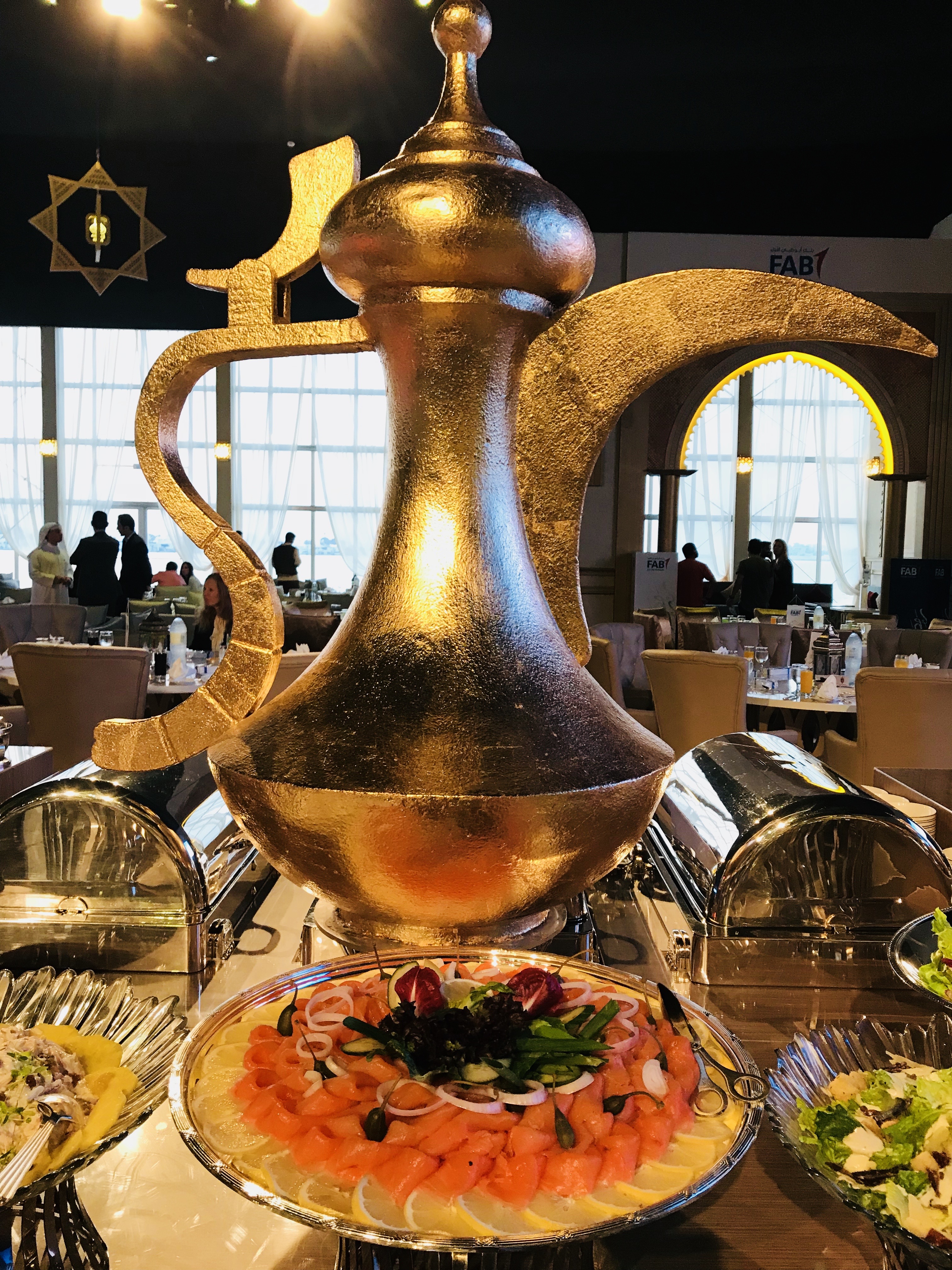
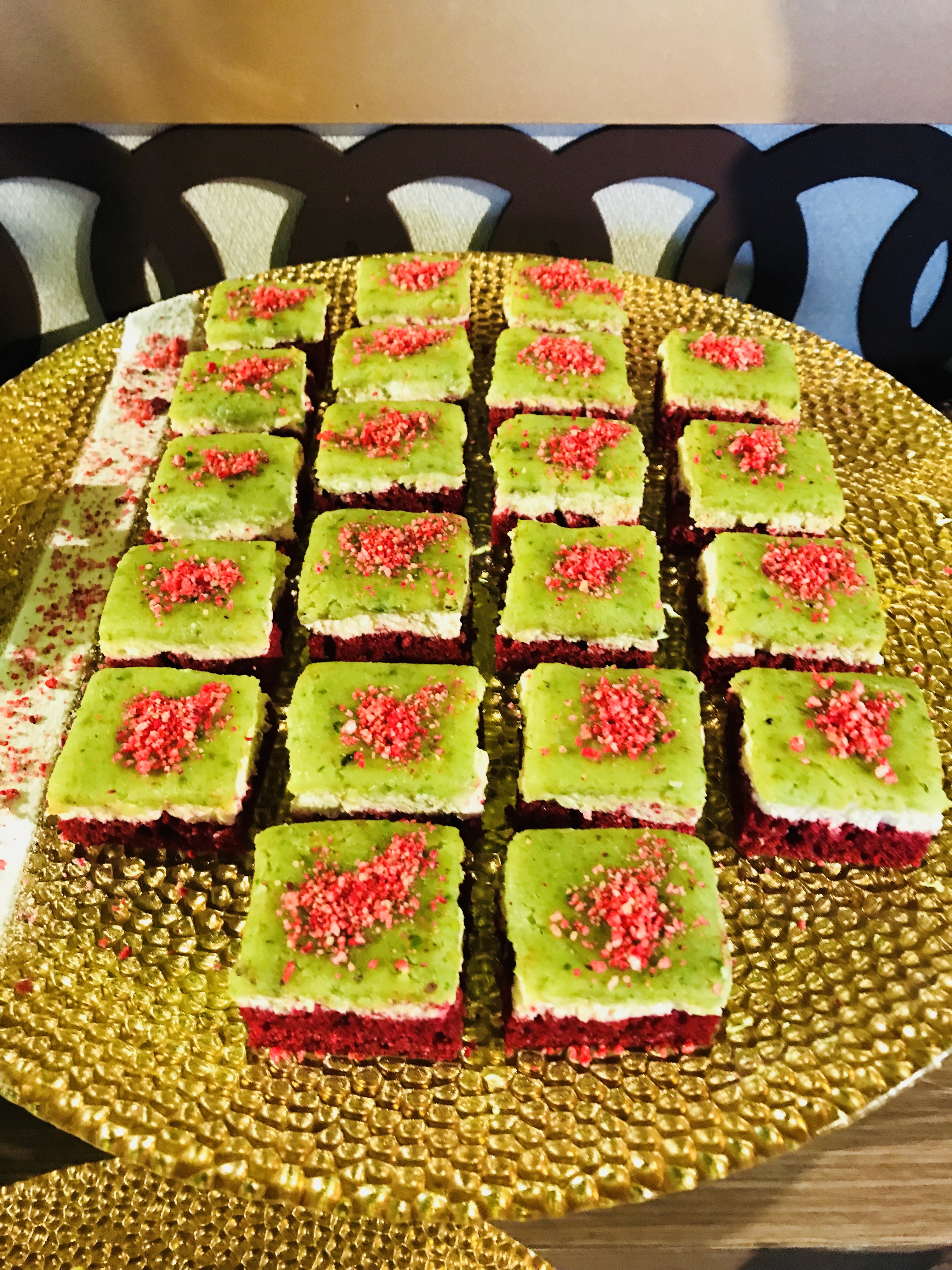
Inside the Emirates Palace “tent” – it’s more of a grand ballroom designed to fit 800 people in one sitting (and to think I was worried there may not be air-conditioning) – I realise that Hawaj is right. Abu Dhabi has been sublimely sanguine over the past few days, the roads are quiet, the beaches are empty and there are no great crowds at many of the tourist attractions. And yes, the food is fabulous. I wander the buffet, there’s hummus and prawns and beef, salad and lamb. But it’s the dessert table with which I’m most intrigued. Apart from baklawa, I recognise nothing but wrap my tongue around the exotically-named sweets…Assafiri, Atayef, Mafrokeh, Shebiyat…they sound like destinations I should visit.
I am dining with Emirates Palace Public Relations and Communications Manager Mohammed Alaoui, who is pragmatic about Ramadan and the subject of fasting. While my plate is piled high with fabulous food, I watch as Mohammed partakes in his first meal of the day, breaking his fast with a few dates, followed by soup and salad.
“It’s a matter of conviction. It’s not about food. There’s a lot of people in this world that don’t eat. It reminds you that it is very good for the body. The fact that you fast, purifies your body over a month,” he says.
“A lot of people, when talking about Islam, go to the extremes. There is a lot of ignorance. There are political reasons and cultural reasons for this.
“The west has a total ignorance of our religion because people don’t read and the perception is that Islam is a violent religion. This just gets you afraid. We want to educate these people.”
On my flight to Abu Dhabi, I read the Gulf News and a headline catches my eye “Understanding the Right-Wing Mindset”. But they are not talking about Islam, but the United States. Author Taria A. Al Maeena is writing about the recent school shootings and an argument he had with an American who claims the war on Iraq was “necessary to protect America”.
On the Texas high school shooting, Maeena writes: “It was a tragedy that had no political or religious undertones, I told him, and there were certainly no Islamists involved to the disappointment of many Western pundits who are quick to malign an entire religion based on the dastardly actions of a few deviates.
“Making America great again is a noble thought, but it will never come through the barrel of a gun or expulsion of all non-whites.”
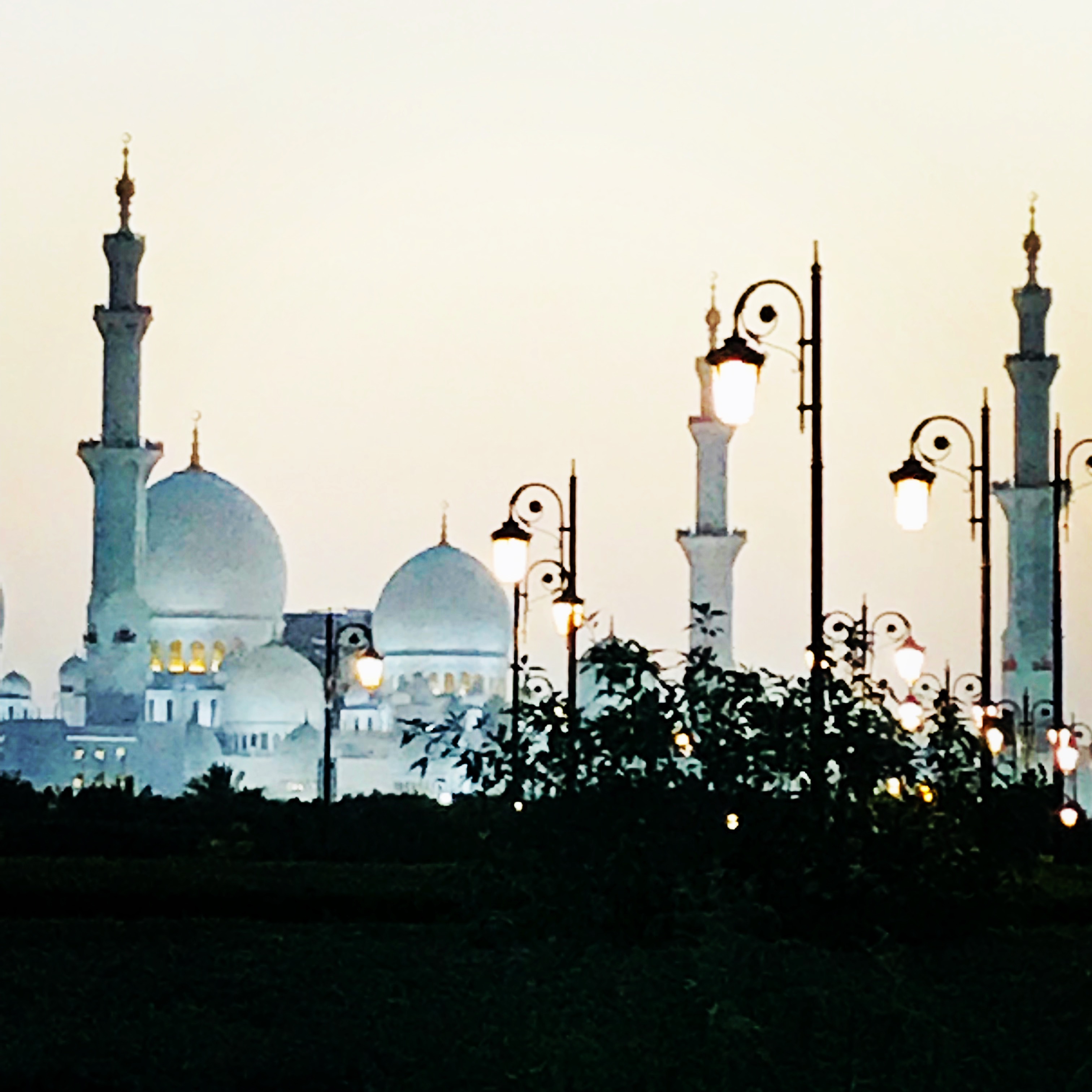
During my short time in Abu Dhabi I find the Emiratis courteous, contemporary, kind, entertaining and educated. Abu Dhabi is dry desert days and warm Arabian nights. It’s blue beaches, white sand, mesmerising mosques and amazing art galleries, high-end hotels and five-star spas. It’s salty black olives, smoky, smooth hummus, plump dates and fresh figs. Abu Dhabi is Arabs who roll their “r’s” when they talk in English and speak with you with an intense interest through dark and mysterious eyes. It’s full moons, full stomachs and full minds. Whether you go to Abu Dhabi during Ramadan or not, you will find a land that will challenge your perceptions of the Middle East and shift the sands of your soul.
The Global Goddess flew to Abu Dhabi as a guest of Etihad Airlines in one of their world-class Business Studios http://www.etihad.com/en-au/
She stayed as a guest of Abu Dhabi Tourism https://visitabudhabi.ae/au-en/default.aspx
This year’s Ramadan runs from May 17 to June 16 – the dates move forward by 11 days every year
Tag: Arabs
Muslim Mothers, Berber Boys, and Arabian Knights
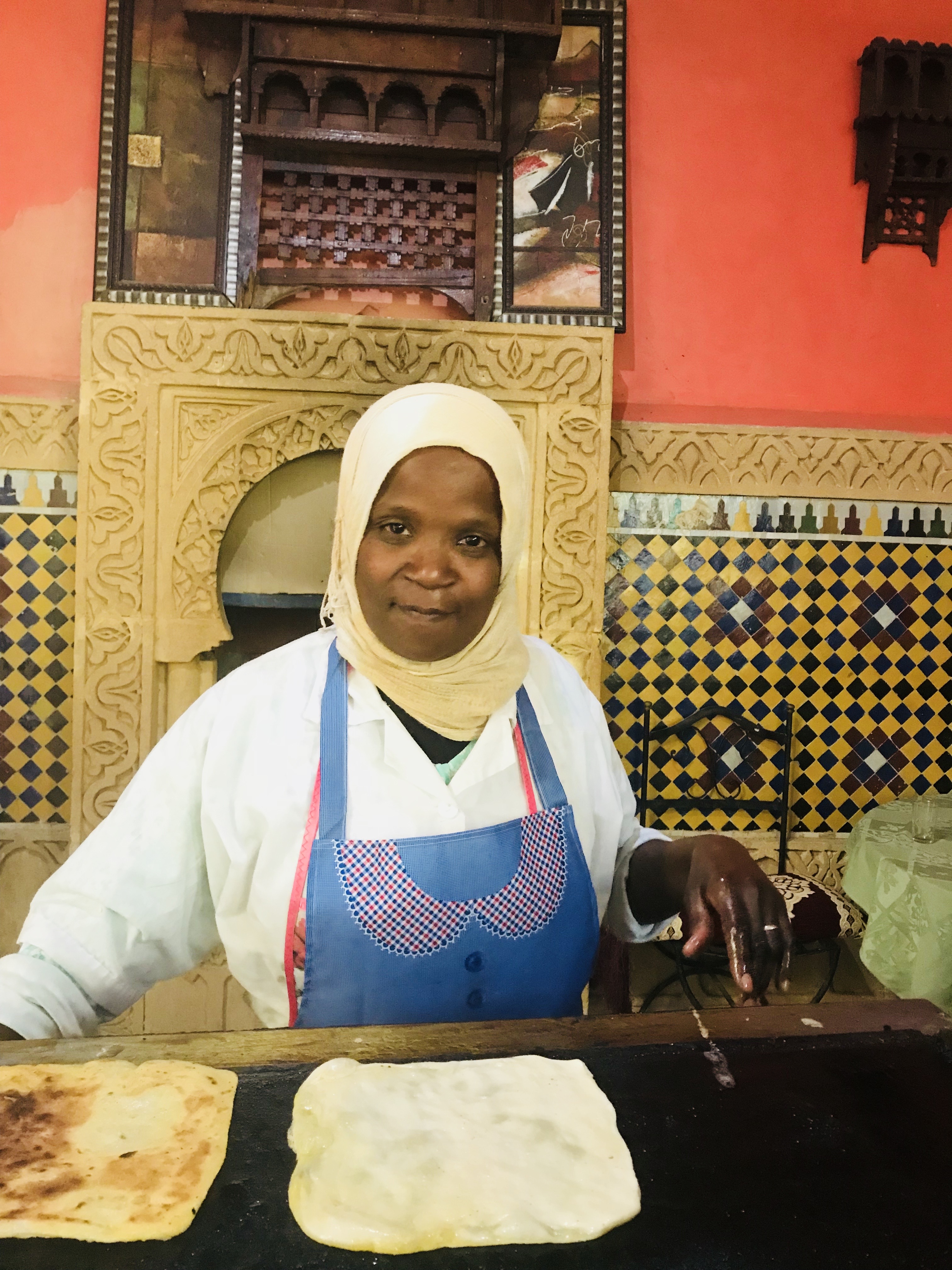
I CAN tell that she’s stunning, even beneath her Muslim hijab, as she sits next to me on my flight from Dubai to Casablanca, this pretty Palestinian woman and her handsome husband, a Moroccan man. She smells of musk and optimism and when I ask her about the name of her perfume, she opens her phone and conspiratorially shows me a photo of a beautiful woman with long, flowing hair.
“It’s me,” she whispers.
Despite her head covering, we are not that different, my seat mate and me. During the seven-hour flight she listens to Adele and watches Wonder Woman. I view a documentary on Whitney Houston, and punctuate the hours by listening to Mariah.
From time-to-time she teaches me a few Arabic words: Maharba (hello/welcome); Shokrun (Thankyou); and Smaheli (Excuse Me). The phrase I most adore, Mashi Muskil (no problem), rolls off my tongue with such delight I can practically taste the words.
But she looks perplexed when I ask her for a polite phrase to use in case I am hassled or harassed.
“You won’t be hassled,” she assures me.
Yet, I persist, until she asks her husband who eventually utters “Baed Meni” meaning “stay away from me.”
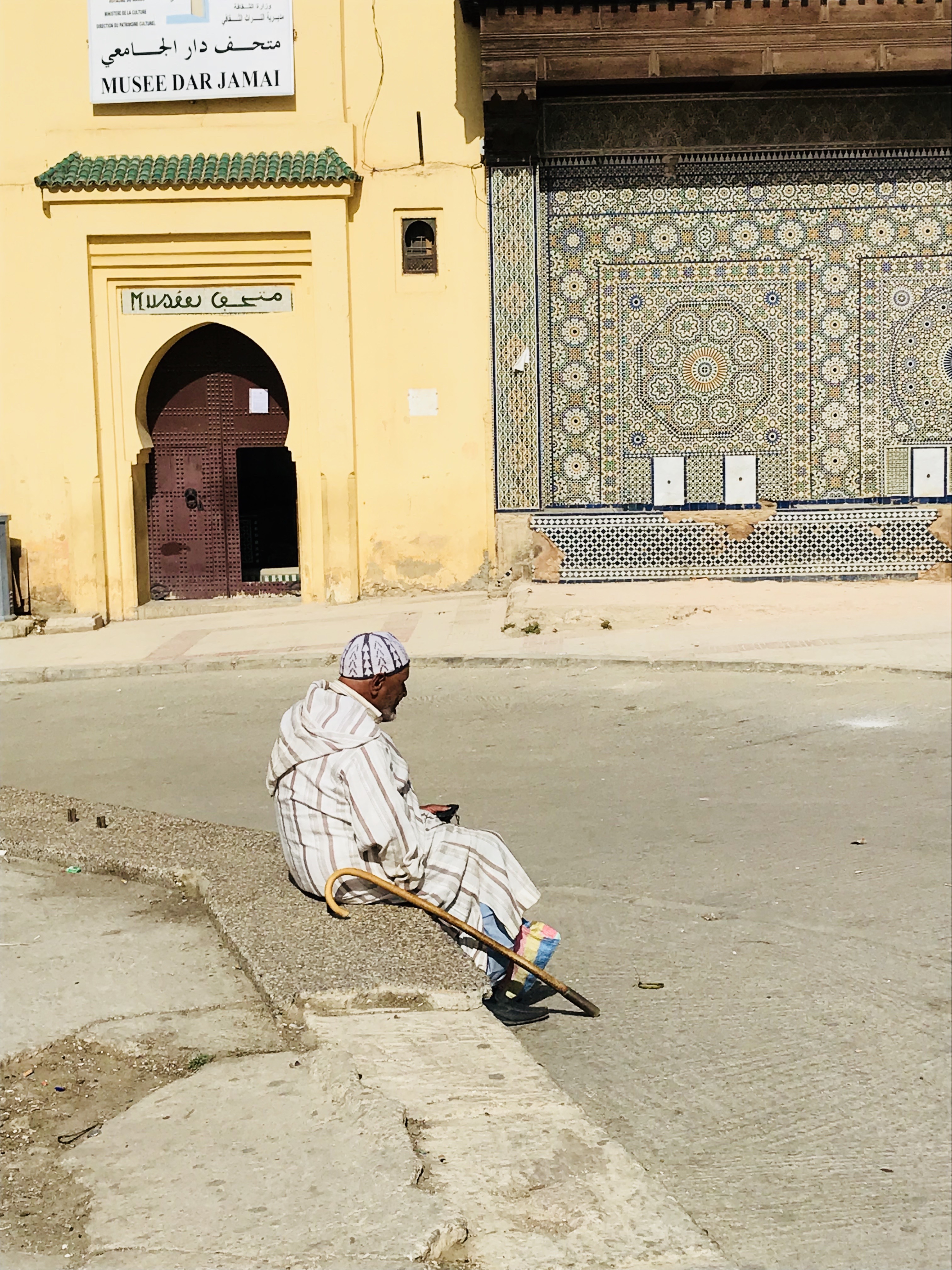
Seven hours later in Casablanca, a rusty, dusty place, my first impressions of the men pendulum from being complete gentlemen concerned about my welfare as a woman, travelling alone until I meet my tour group, to that of a bunch of leering, jeering fools.
Earlier that evening on the street, while talking to my hotel door man, I am hassled by three men speaking Arabic. I don’t understand what they say, but my hotel host looks horrified and explains: “They say something very bad to you. They are drunk.”
I have just met a bunch of Casablanca wankers.
“I can get this shabby treatment back in Brisbane,” I want to shout after them, but my limited Arabic fails me.
I have a long, dark night of the soul in my basic hotel room with an inexplicable amount of door locks. I can’t work out whether they are to keep me in or to keep someone out. Why have I come to this strange land all alone?
The solitary light bulb in my spartan room explodes, stranding me in complete darkness. I toss and turn until I hear the dawn call to prayer wailing out above the sleepy city.
So unfamiliar am I with this haunting, yet beautiful sound, at first I think it’s a motorbike in the distance. I lay in bed in the early morning cool and wait, impatiently for first light, still searching for meaning behind my latest travels. Of course, I am here to hunt and gather stories and photographs for my editors, but on a personal level, what is it that I seek?
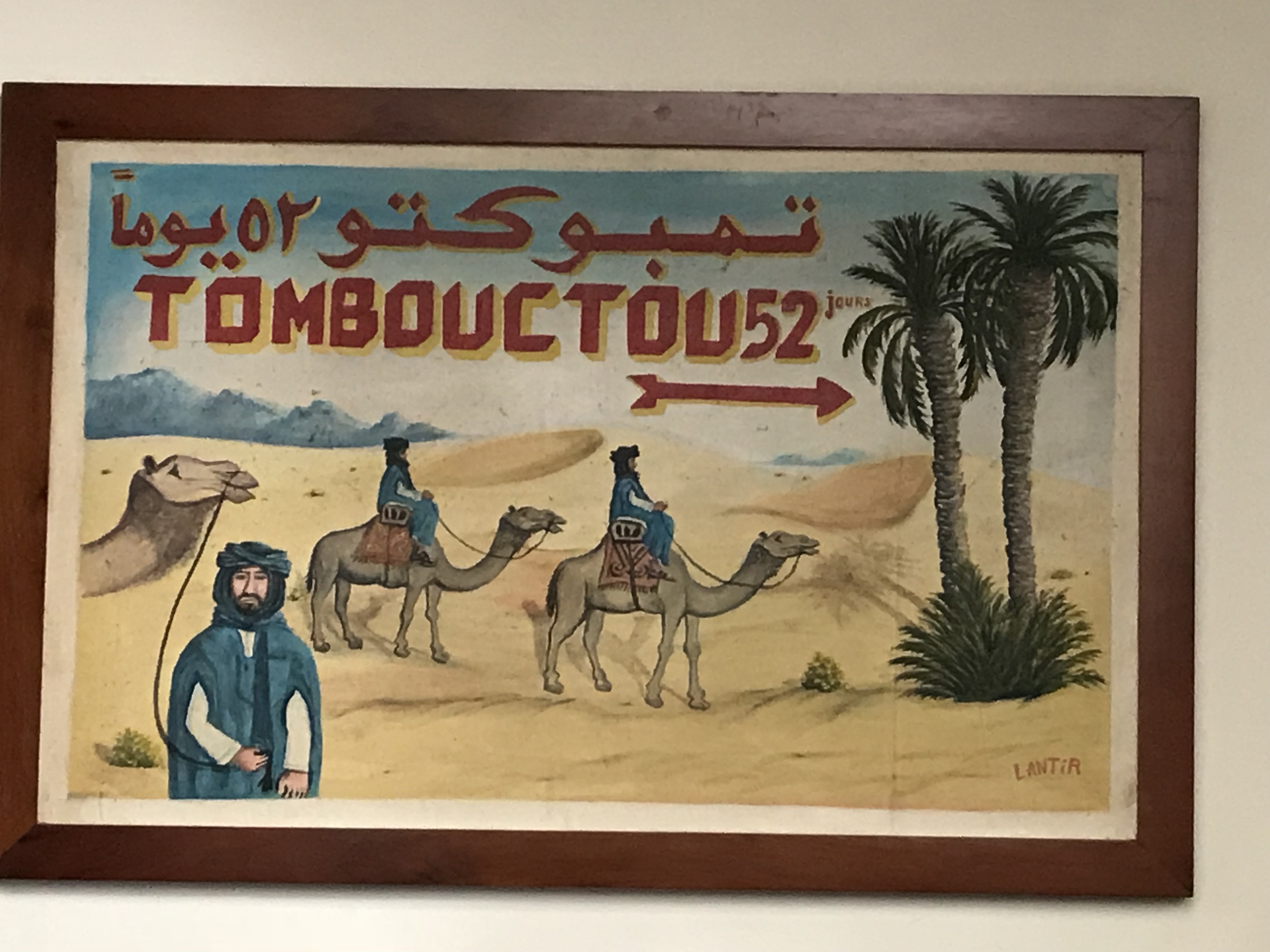
The next day, I steel myself and catch a cab to the art deco museum which is a feat in itself, as cabs in Casablanca are shared affairs, with the driving stopping randomly to pick up other passengers. By now, I’ve learned the word for “hot” as in the weather. I practice my Arabic, telling the driver it is hot today. He replies “You are hot.”
I’m frustrated when, as each male passenger enters his cab, they begin a long conversation which, from the pointing and staring, includes me.
I make a lunch reservation for one and dine at Rick’s Café. Over Moroccan lemon roasted chicken with saffron rice, raita, and a cold Casablanca beer, the water asks: “You like Moroccan food?”
“Yes, very much,” I say.
“You like Moroccan men?” he asks.
“I don’t know yet,” I respond.
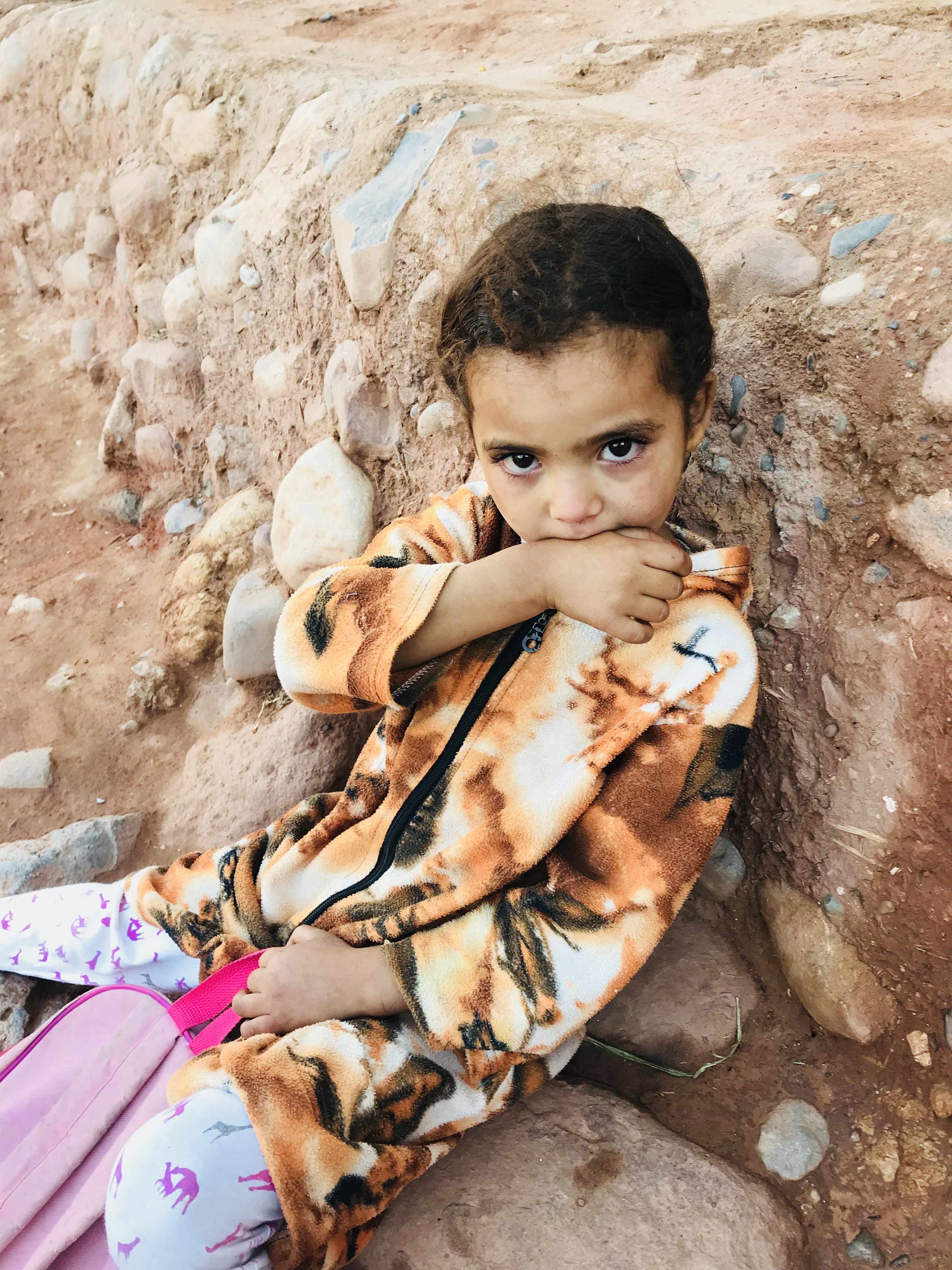
Is it fair to impose my Australian views on feminism onto another culture? I juggle this concept in my mind during my 13-day Intrepid Morocco Uncovered journey which starts in Casablanca before heading north to Rabat, east towards Meknes, north to Chefchaouen, south through Fes, Midelt and the Sahara, before hooking back west again through the M’Goun Valley, Ait Benhaddou and finishing at Marrakech.
Khaled, my Intrepid Travel tour guide and a proud Berber man from Morocco’s Indigenous people, teaches me about Moroccan marriage law.
As late as 2004, a man could have three wives under former laws which were brought in to support poor women. Now, a man can only take a second wife if his current wife agrees. And women can divorce their husbands, and in most cases, custody of the children is awarded to the mother.
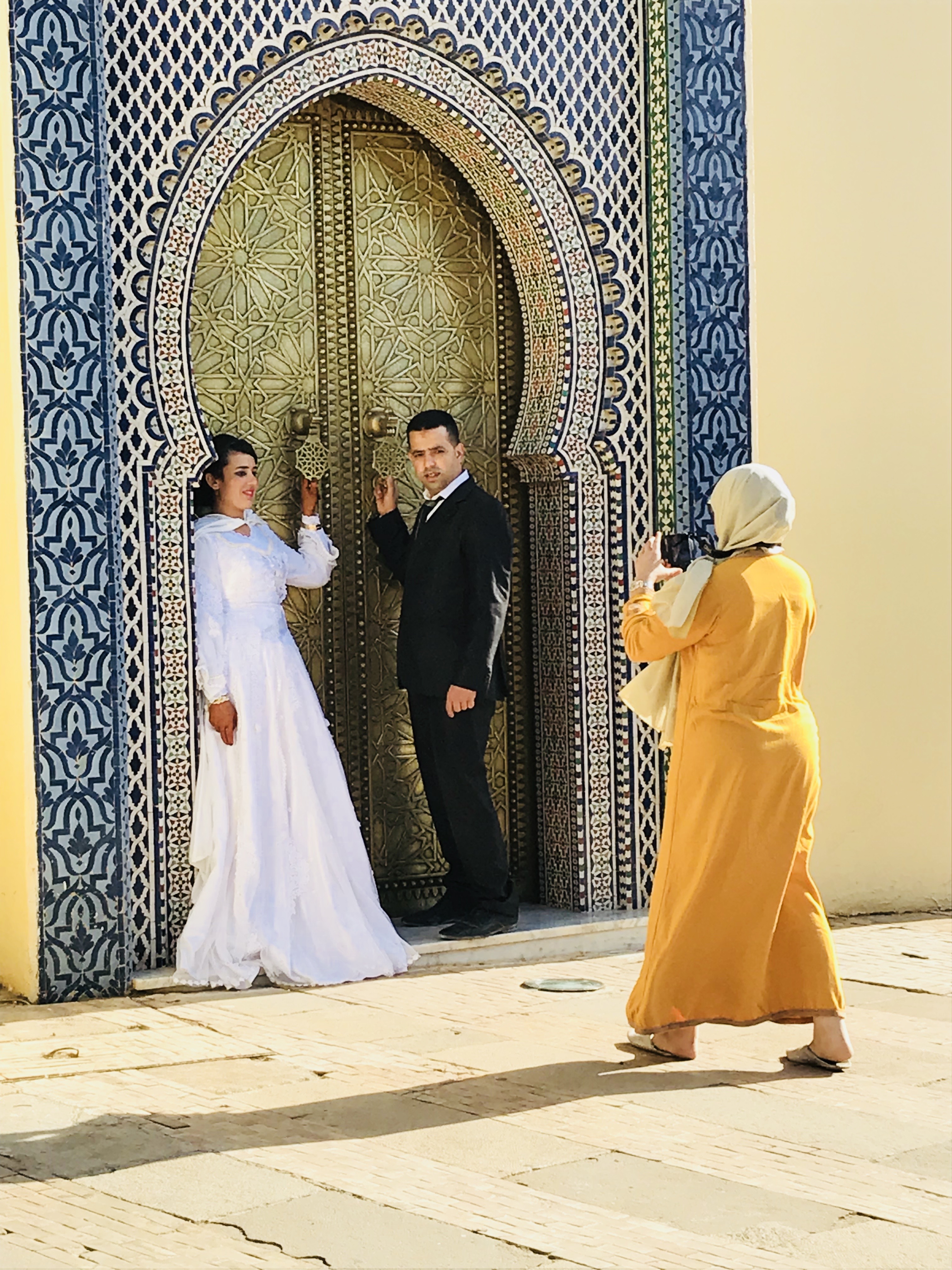
It’s a complex system where if a Muslim man marries a non-Muslim woman, the woman need not convert to Islam, but if a Muslim woman marries a non-Muslim man, the man must convert.
Arranged marriage still exists in some villages and if a man visits a woman’s family and they serve him tea with sugar, he has been accepted into the family. If the tea is bitter, he has been rejected.
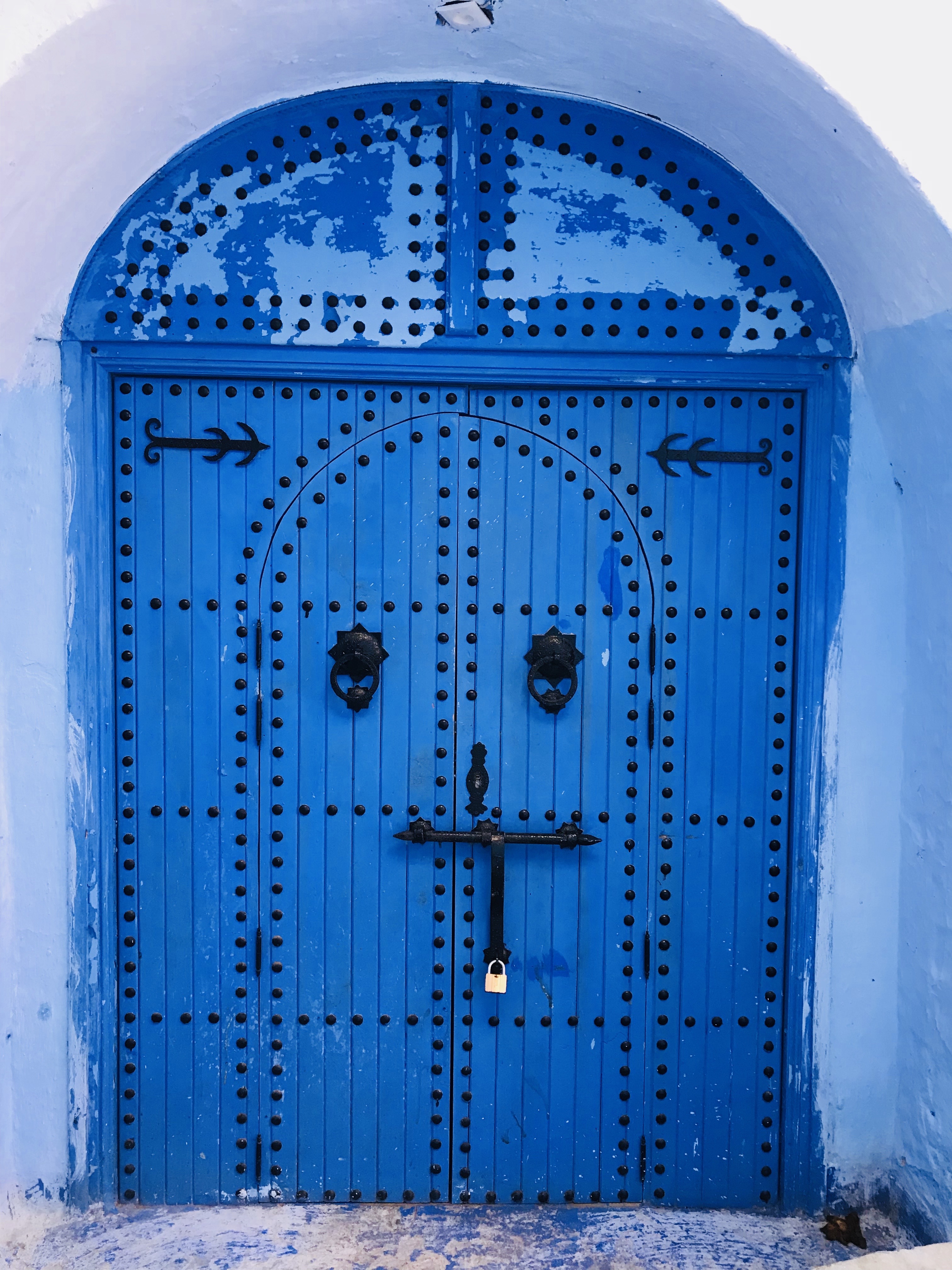
One magical morning, while wandering Morocco’s blue city of Chefchaouen, I catch an elderly couple holding hands. They disappear around a corner. Like a lost puppy I follow them for a while, watching him assist her up those steep streets. Wondering about their love story.
Khaled, 35, is a modern Moroccan man who, by his own admission, is a “bad Muslim” who drinks alcohol and rarely prays.
He confesses how he once told a young Moroccan woman in Marrakech who was wearing a skimpy outfit to cover up, saying he found her outfit “disrespectful.”
She told him to “mind his own business.”
I ask Khaled why there appear to be no woman anywhere in the country who frequent the coffee shops at which there are copious men.
He explains that “women don’t like going out for coffee”. He believes Moroccan women have equal rights to men in his country.
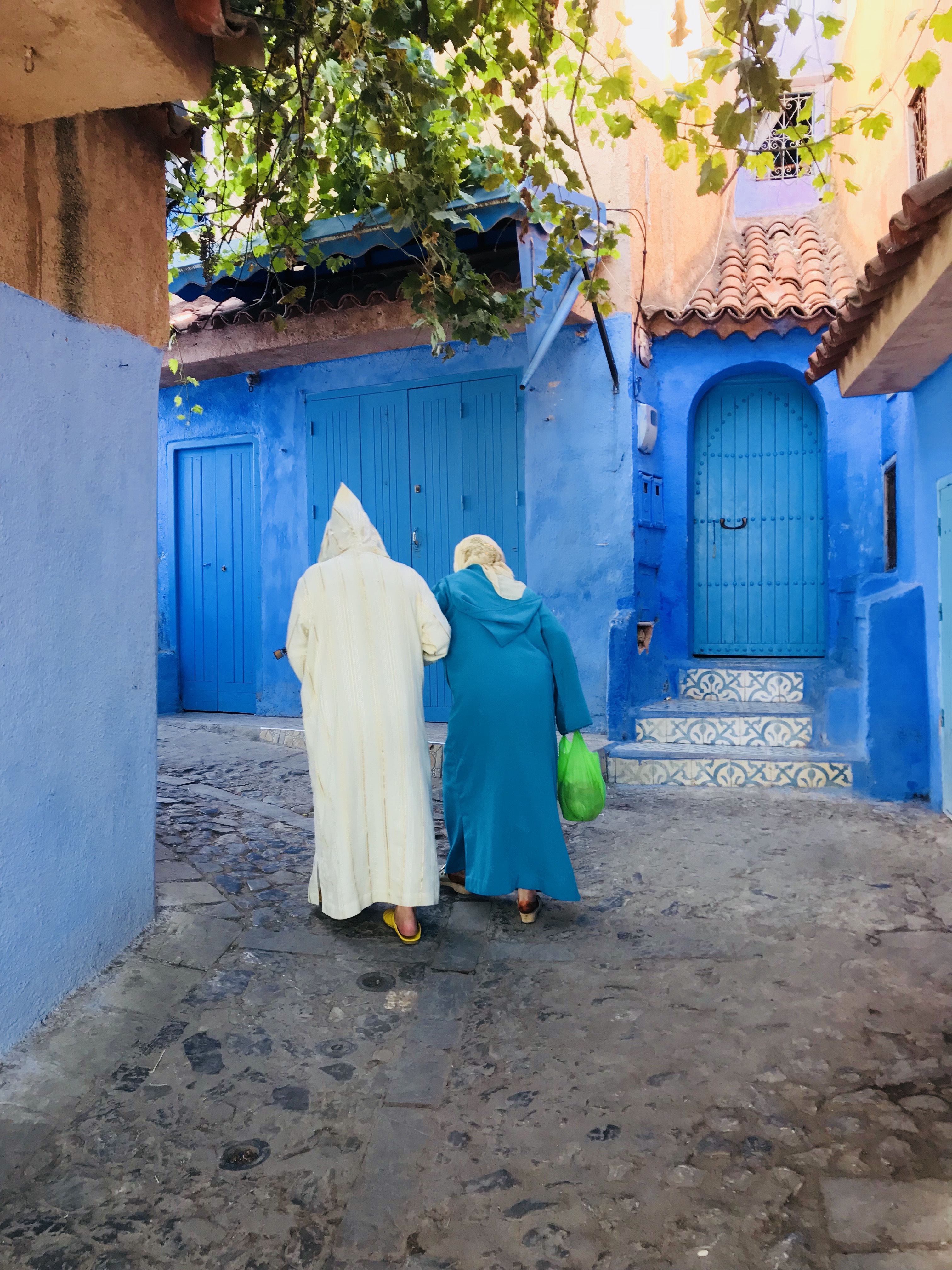
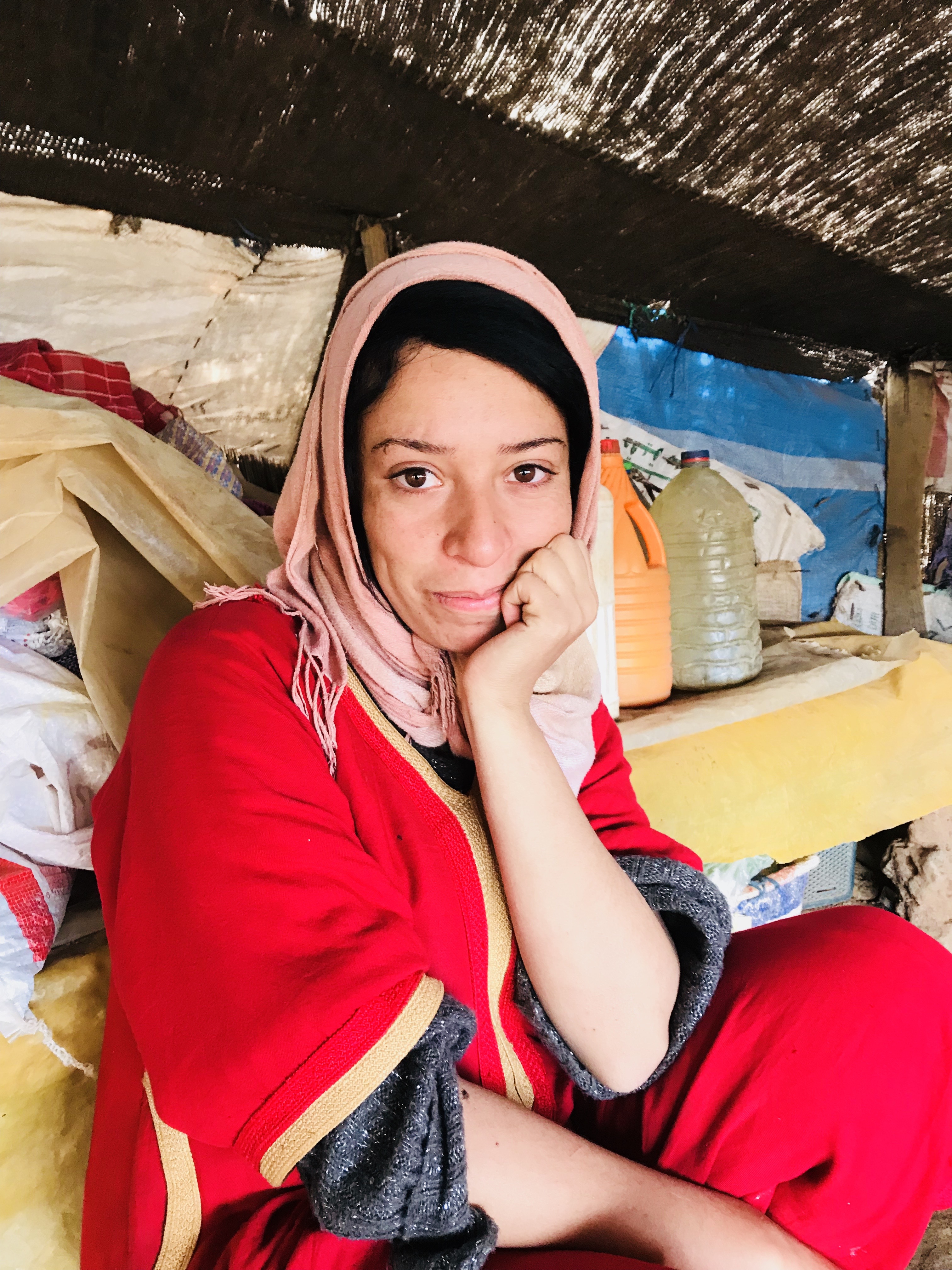
Exploring feminism in Morocco is like stumbling into the Fez medina without a guide. There’s 10,000 streets here, and in one wrong turn you can become hopelessly lost. Hakima, our Fez guide, says if a woman is smart, she will learn to shut her mouth to a stupid husband, and then do what she wants anyway. Perhaps feminism isn’t struggling here, but cleverly hidden, under the veil many women discarded here 1912.
Despite its differences and difficulties, allow yourself to fall in love with the people of this colourful kingdom in northern Africa. For they are generous souls with an incredible history.
By the end of my journey I know about 13 Arabic phrases, one for every day of my trip. And I’m smitten. Arabic sounds as spectacular as it looks in its written form. A rush of long, curly sounds and words that stretch as far as the Sahara itself.
Wrap your mouth around Morocco. And open your mind and heart. Things won’t be the same again. Inshallah.
The Global Goddess travelled as a guest of Intrepid Travel https://www.intrepidtravel.com/au/morocco/morocco-uncovered-100927
 The Global Goddess